
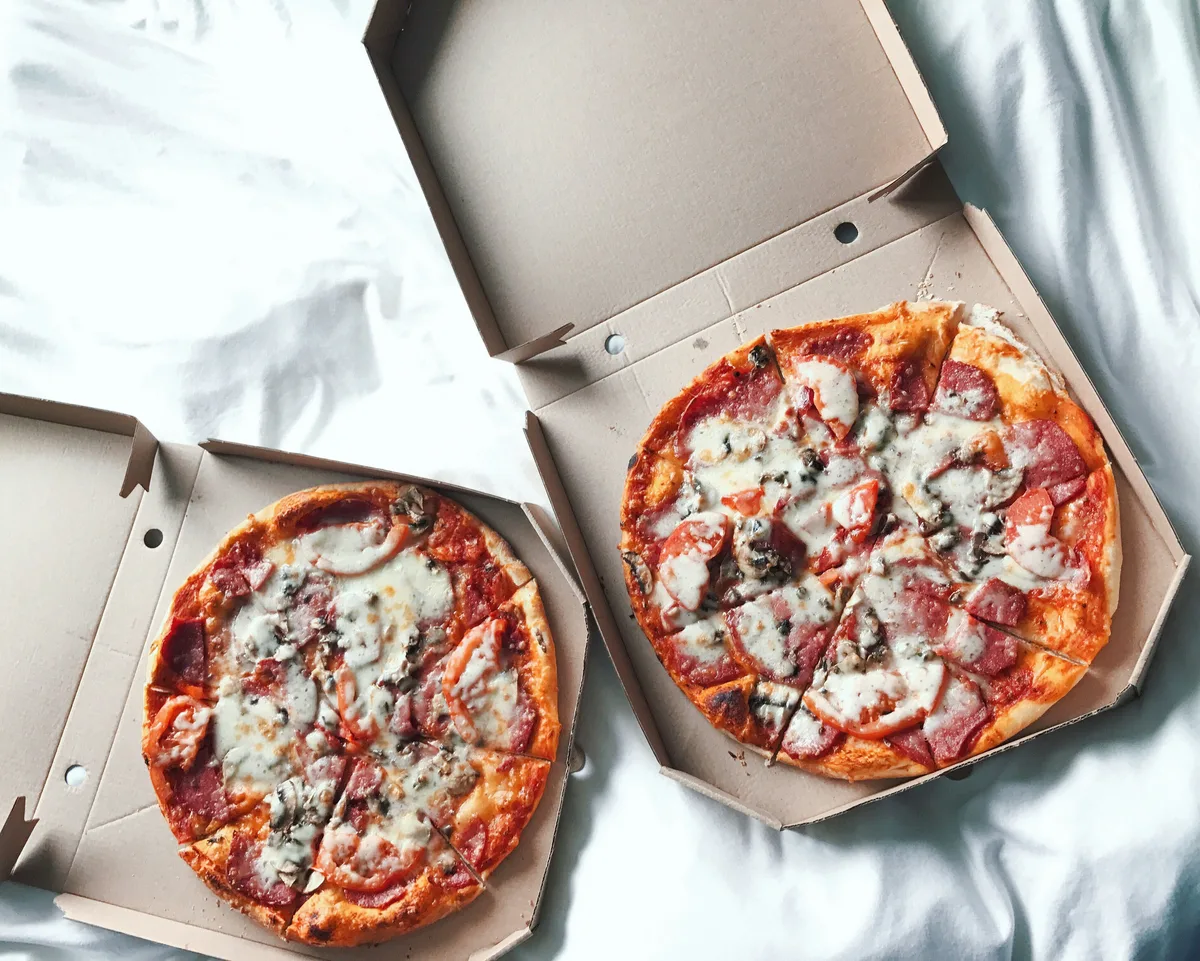
Two medium pizzas are often bigger than one large, but only if the large is 14 or 16 inches.
Once a large reaches 18 inches, the math flips, and the single pizza becomes bigger overall.
Now here’s what most people miss: More pizza doesn’t automatically mean better value.
Size is only the first part of the equation.
Which Is Bigger? Compare Total Pizza Area
When you’re buying pizza, you aren’t buying diameter; you’re buying square inches. Because we’re dealing with circles, every extra inch of width adds way more food than you’d think.
To give you a baseline, a standard 12-inch medium has about 113 square inches of pizza. Grab two of them, and you’re looking at 226 square inches.
Now compare common “large” sizes (which vary by chain):
- 14-inch Large: 154 sq in (Two mediums win easily)
- 16-inch Large: 201 sq in (Two mediums still win)
- 18-inch Large: 254 sq in (The 18-inch wins. It actually beats two mediums by a solid margin.)
That’s the size comparison.
Now let’s see whether that extra pizza is actually costing you more.
2 Mediums vs 1 Large: Which Is the Better Deal?
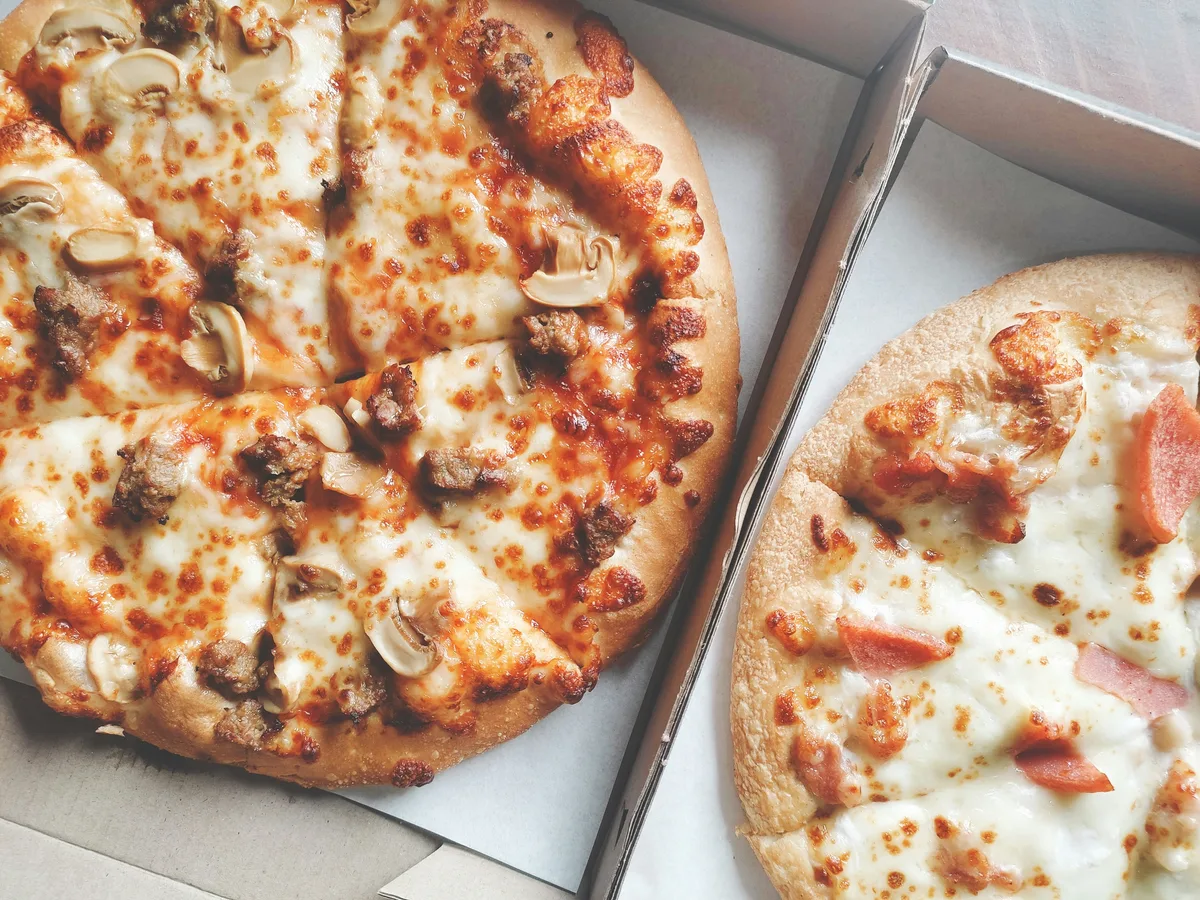
Size tells you how much pizza you’re getting. But, price tells you whether it’s actually the smarter buy.
Pizza chains frequently run promotions like:
“2 Medium Pizzas for $X.”
It sounds like more pizza for less money. But the only number that truly matters is cost per square inch.
Here’s how to calculate it:
Cost per square inch = Price ÷ Total Area
For example:
- Two 12-inch mediums = 226 sq in total
- One 16-inch large = 201 sq in
If:
- The two mediums cost $28 → $28 ÷ 226 = $0.124 per sq in
- The 16-inch large costs $21 → $21 ÷ 201 = $0.104 per sq in
Even though the two mediums give you more total food, the large is actually the “cheaper” bite. You’re paying a premium for that second box.
So now you know the size difference. You know the price difference.
But there’s one more factor that usually decides whether 2 mediums or a large pizza actually makes sense.
Stop guessing on the headcount. Our Pizza Calculator tells you exactly how many pizzas you need.
So, Which One Should You Order?
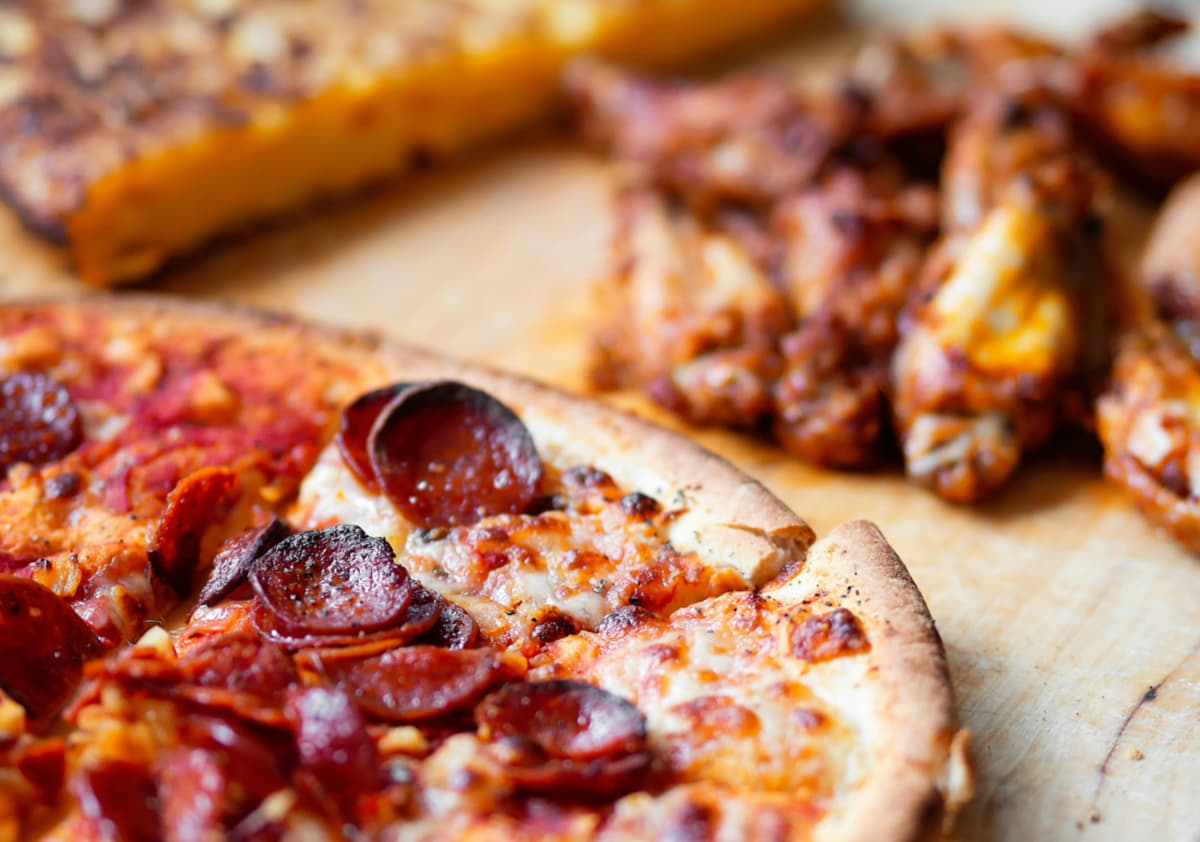
Area tells you how much you’re getting. Price tells you what you’re paying.
But the right choice isn’t just about the math; it’s about the logistics of the room. Here is how I break it down when I’m ordering:
If You Want Variety → Choose Two Mediums
Two pizzas mean two flavors.
One large = one flavor. Everyone has to agree, and someone’s always compromising.
Two mediums = options. You can do:
- One cheese, one pepperoni
- One veggie, one meat lovers
- One gluten-free crust, one regular
- One kid-friendly, one with the weird toppings you’ve been craving
Two mediums reduce compromise.
This way, nobody goes hungry, and you avoid the dreaded topping negotiation.
Crust-to-Center Ratio
This is the “secret” variable. Two mediums mean two entire rings of crust. One large gives you a massive, topping-heavy center.
If your friends are the type to leave a pile of “pizza bones” (discarded crusts) on the plate, go with the Large. You’re paying for toppings, not bread handles.
The Group Size Playbook
- 2–3 people: One large generally works out great.
- 4–6 people: Two mediums allow topping flexibility and easier sharing.
- 7+ people: You’ll need multiple pizzas either way. Use our Ultimate Pizza Size Guide to match your headcount to the right number of slices.
So… Which Should You Actually Order?
Go with two mediums if:
- The large is only 14–16 inches
- You need topping variety
- You’re feeding 4+ people with different tastes
- There’s a killer deal running
Go with one large if:
- It’s 18 inches
- The price per square inch is better
- Everyone wants the same flavor
- You value simplicity over options
