
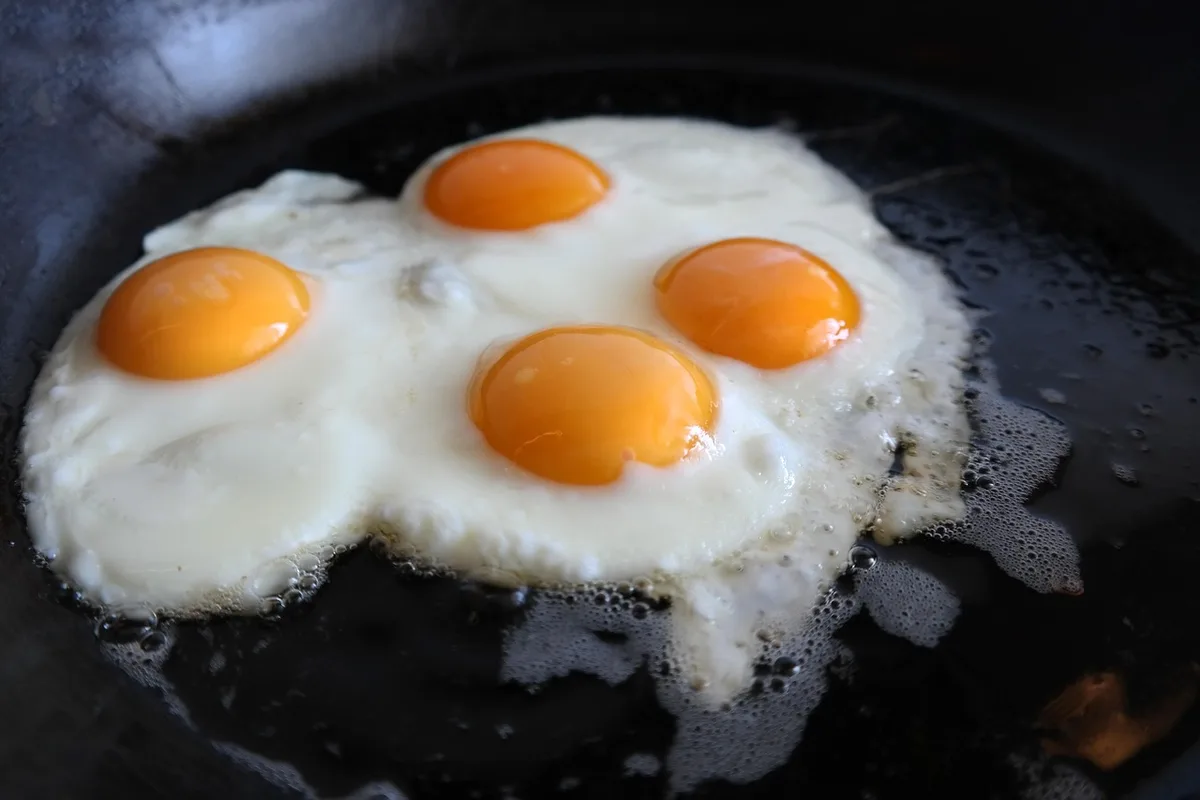
“If you’re tracking your morning macros by the tablespoon, you’re likely overcounting your fat.
Have you ever noticed a shimmering pool of oil left in the pan after you’ve plated your eggs? That’s because you don’t actually eat all the fat you pour in. Thanks to a physics quirk called the “Vacuum Effect,” an egg only absorbs oil during a tiny window as it cools.
The Golden Rule: The “thinner” the oil, the more it drains off. The “thicker” the fat, the more you eat.
By choosing the right oil, you can leave up to 50% of the fat behind in the pan.
Here’s how the most popular cooking fats ranked, starting with the one that leaves the most calories behind.
The Secret of the “Vacuum Effect”
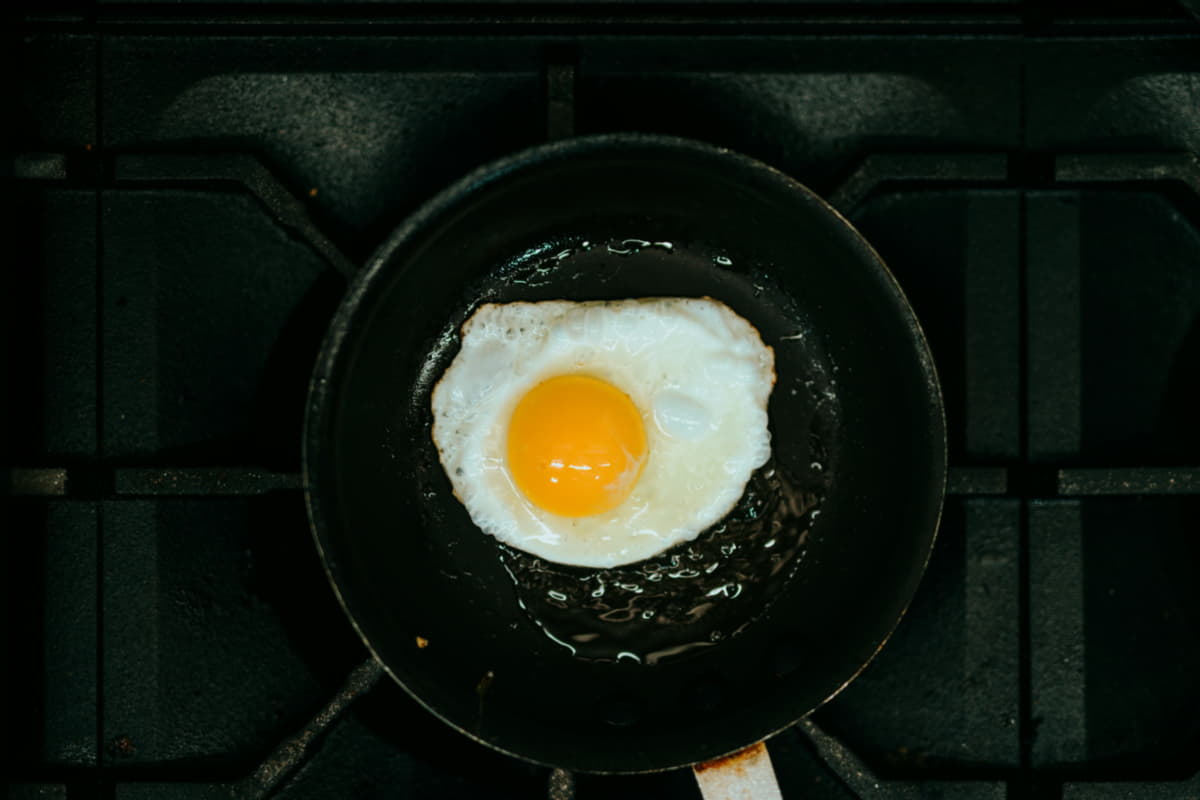
An egg isn’t a sponge, at least not while it’s cooking. While it’s on the heat, escaping steam creates outward pressure that keeps most oil from soaking in.
The real transfer happens after cooking. As the egg cools, that steam condenses, pulling nearby surface oil into tiny gaps through capillary action, a process food-science research shows is when most oil absorption actually occurs during frying.
- Thin, runny oils drain back into the pan before this cooling phase.
- Thicker fats linger on the surface long enough to get absorbed.
Once you understand this cooling window, the differences between cooking fats stop being subtle. Here is the ranking from most “drainable” to most “absorbent.”
The Rankings: Pan-Stickers vs. Plate-Slickers
1. Extra Virgin Olive Oil
Olive oil is basically the drainage king. Because it stays light and fluid when it’s hot, excess oil doesn’t cling to the egg whites, it beads up and slides back into the pan.
What you’re actually eating: You’re usually eating about half of what you pour in. If you plate your eggs and see a shimmering pool left in the skillet, that’s a quiet calorie win.
2. Avocado Oil
Avocado oil behaves a lot like olive oil, but with a bit more heft. It handles high heat beautifully, yet once the burner is off, it tends to hug the edges of the egg a little more tightly.
What you actually eat: Because it’s naturally heavier, avocado oil doesn’t drain quite as fast as olive oil. You’ll eat a bit more of it, though you’ll still see some left behind in the pan.3. Cooking Spray
3. Cooking Spray
Don’t let the “0 calorie” label fool you. Cooking sprays can list zero calories thanks to FDA serving-size rounding rules, but every spray still contains oil.
Because the oil is applied as a fine mist, there’s no pool for the egg to drain from. Every microscopic droplet that lands on the pan ends up coating the egg, meaning almost nothing gets left behind.
What you’re actually eating: You’re eating nearly 100% of what you spray. It’s still fewer total calories than a heavy pour of oil, but none of it drains away.
4. Butter
If you’ve ever noticed that your pan looks almost dry after frying with butter, there’s a reason for that. Unlike pure oils, butter is packed with milk solids.
When things get hot, those solids act like a kind of culinary glue, bonding the fat directly to the egg proteins.
What you’re actually eating: Since butter doesn’t slide off easily, you’re eating the vast majority of what you put in the pan. But honestly, that’s exactly why buttered eggs have that melt-in-your-mouth texture.
5. Coconut Oil
Coconut oil is a bit of a slow mover. Even once it’s fully melted, it stays much thicker and heavier than something like olive oil.
Because of that thickness, it doesn’t drip back into the skillet very quickly. By the time the egg cools, most of that surface oil is still hanging around, and gets pulled in.
What you actually eat: You can safely assume most of the coconut oil makes it onto your plate.
6. Bacon Fat
Bacon fat is the ultimate sticker. It’s thick, smoky, and loaded with tiny protein remnants from the bacon itself. During frying, those proteins actually fuse into the crispy edges of the egg.
What you’re actually eating: You’re eating nearly all of it. It’s definitely not the leanest option, but it’s arguably the most flavorful. If you’re cooking with bacon grease, you’re committing to every drop.
How to Leave More Fat in the Pan (Without Changing Your Eggs)
If you want to cut calories without changing your breakfast, technique matters as much as your oil choice.
Here’s how to keep more fat in the skillet, and less on your plate:
- Preheat the pan: That instant sizzle creates a steam “shield” that helps block oil from soaking in.
- Use Nonstick: You can use a fraction of the oil and still get a clean flip.
- Measure, Don’t Pour: “Free-pouring” is how 50 calories quickly becomes 150.
- Stop Basting: Spooning hot fat over the top forces oil into the egg’s surface.
- The 5-Second Drain: Lift the egg and hold it over the pan before plating. This lets gravity pull the oil away before the cooling egg traps it.
The Bottom Line
Don’t just track what you pour, look at what’s left behind. Using a thinner oil like olive or avocado, plus smart technique, can cut your actual fat intake by nearly half compared to butter or bacon grease.
If your pan is still shimmering after you plate your eggs, you won.
If this made you look at eggs a little differently, there’s plenty more where that came from.
