
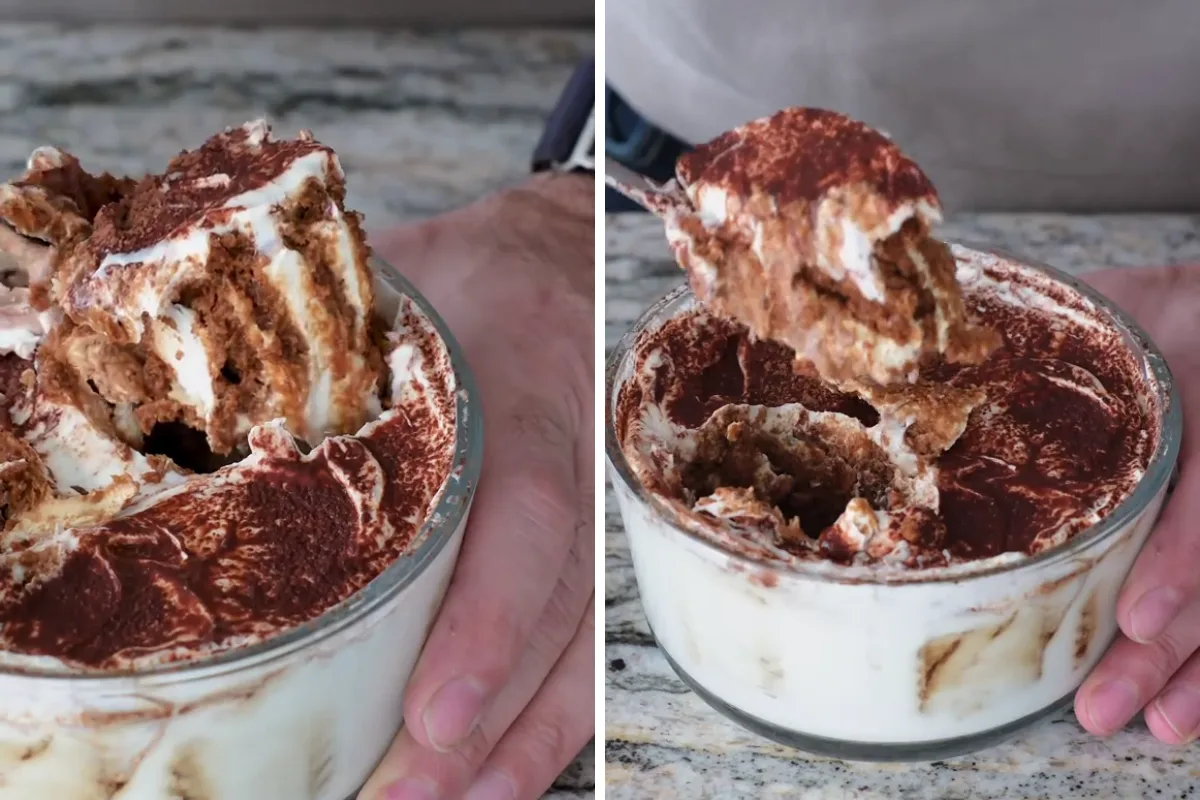
Ever notice how TikTok food hacks never know when to stop?
One minute, the internet is collectively obsessed with a dessert because it’s shockingly simple. The next, a creator adds a few “small upgrades,” and suddenly the comment section is screaming in all caps: “JUST MAKE A NORMAL CHEESECAKE.”
That’s exactly what’s happening to the viral “Japanese” Greek yogurt Biscoff cheesecake.
What started as a two-ingredient curiosity has officially crossed the line into “full-blown recipe” territory, and the backlash proves TikTok has very specific rules about how much effort it’s willing to tolerate.
The Original Appeal: Why “Lazy” Was the Point
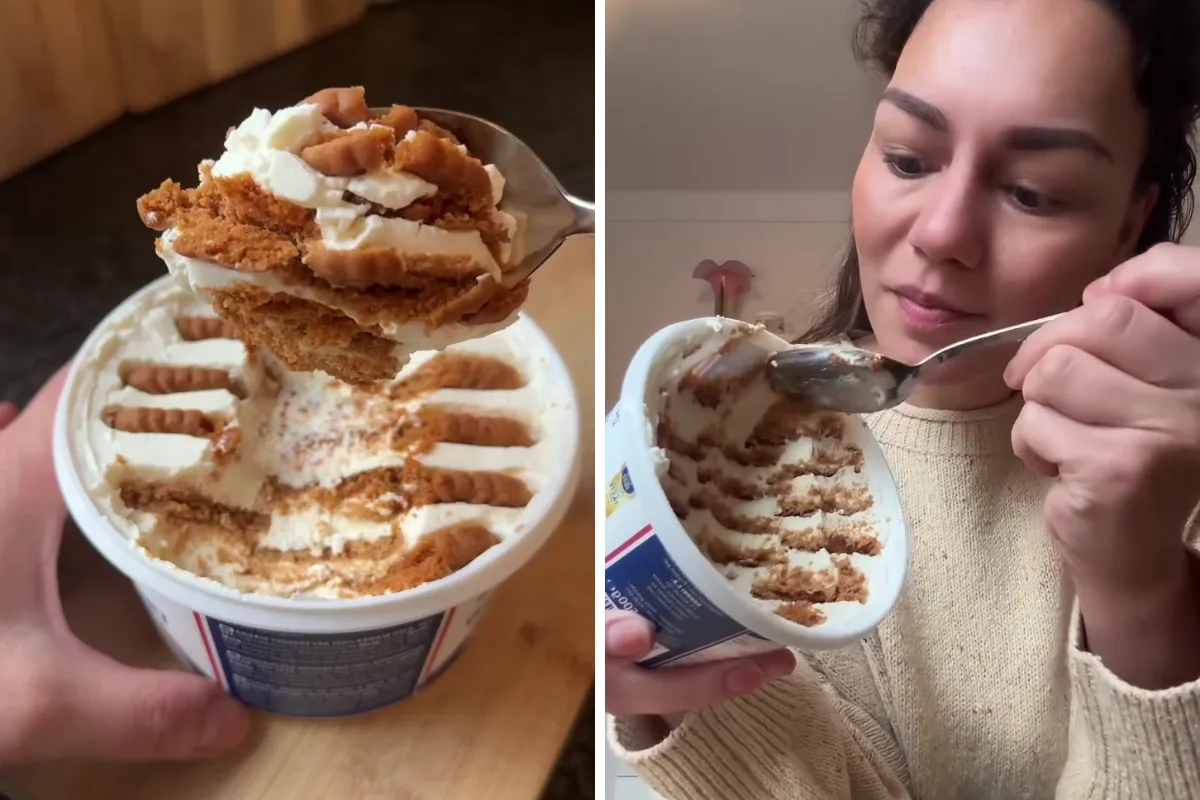
When the yogurt-and-Biscoff version first blew up, the appeal was obvious. No baking, no mixer, no cream cheese.
You just pressed a Biscoff biscuit into a tub of Greek yogurt, left it overnight, and somehow ended up with something that felt like a “cheat code” for dessert. It wasn’t perfect, but it didn’t need to be.
It gave people permission to be lazy without feeling sloppy. It was a hack.
The Moment the “Hack” Broke
Enter TikTok creator @baristainpajamas, who posted what he called a “better take” on the trend.
In the video, he mixes the yogurt with cream cheese. He layers in the cookies. He pulls a double shot of espresso, pours it over the top, and finishes with a dusting of cocoa powder.
He delivers the verdict: An easy, delicious tiramisu.
Visually? It’s stunning. Conceptually? TikTok lost its mind.
The Invisible Line Between “Hack” and “Recipe”
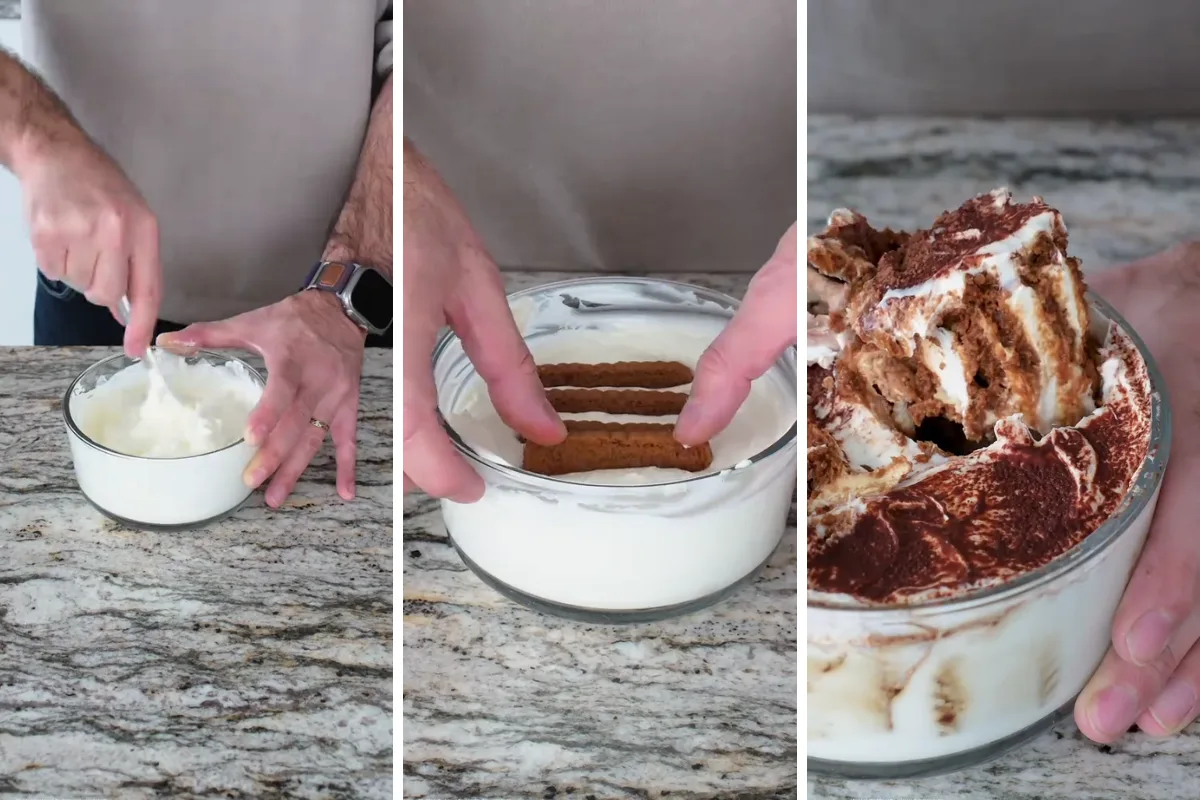
There’s an unspoken rule on the app: Hacks are allowed to be clever, but they aren’t allowed to be complicated. The second that cream cheese entered the frame, the “hack” feeling died.
The comments section turned into a battlefield of culinary philosophy.
- The Purists: “Bruv! That’s just tiramisu.”
- The Health Conscious: “Doesn’t the cream cheese defeat the purpose of it being a healthier option?”
- The Pragmatists: “Just have a normal cheesecake at this point.”
One commenter, Claudio, even did the math, pointing out that this “better take” is now sitting at around 1,200 calories.
The “hack” started as a high-protein snack and ended as a calorie bomb that requires an espresso machine.
Why TikTok Always Does This
This is the predictable lifecycle of every viral food idea:
- The Spark: A stripped-down version goes viral because it’s low effort.
- The “Elevation”: Creators try to stand out by adding “upgrades.”
- The Complexity Creep: Too many steps are added.
- The Revolt: The audience realizes they are just watching someone cook a regular meal with extra steps.
As one user, Robert Salam, sarcastically put it: “Wow, a cheesecake with cheese in it. Whoever would have thought.”
What We’re Actually Arguing About
This debate isn’t really about yogurt or Biscoff. It’s about expectations.
A hack is supposed to feel like you’re getting away with something, like you’re cheating the system. Mixing cream cheese, pulling espresso shots, and layering ingredients isn’t a shortcut; it’s just… making a dessert.
Once that “cheating” feeling disappears, so does the goodwill. That’s why you get comments like It’s by Grace, who bluntly reported: “Tasted like vomit. Will not be making it again.”
The Real Lesson
TikTok food culture isn’t about perfection; it’s about the Effort-to-Reward Ratio.
Once a hack becomes a recipe, the internet decides you’ve missed the point. Give it a week, and someone will strip this back down to just two ingredients, call it “The Real Hack,” and the whole cycle will start all over again.
Simplicity is the main ingredient on TikTok, and the second you add a double shot of espresso, you’ve probably gone too far.
Curious what the internet is arguing about next? You can find more trending food and culture stories right here.
