
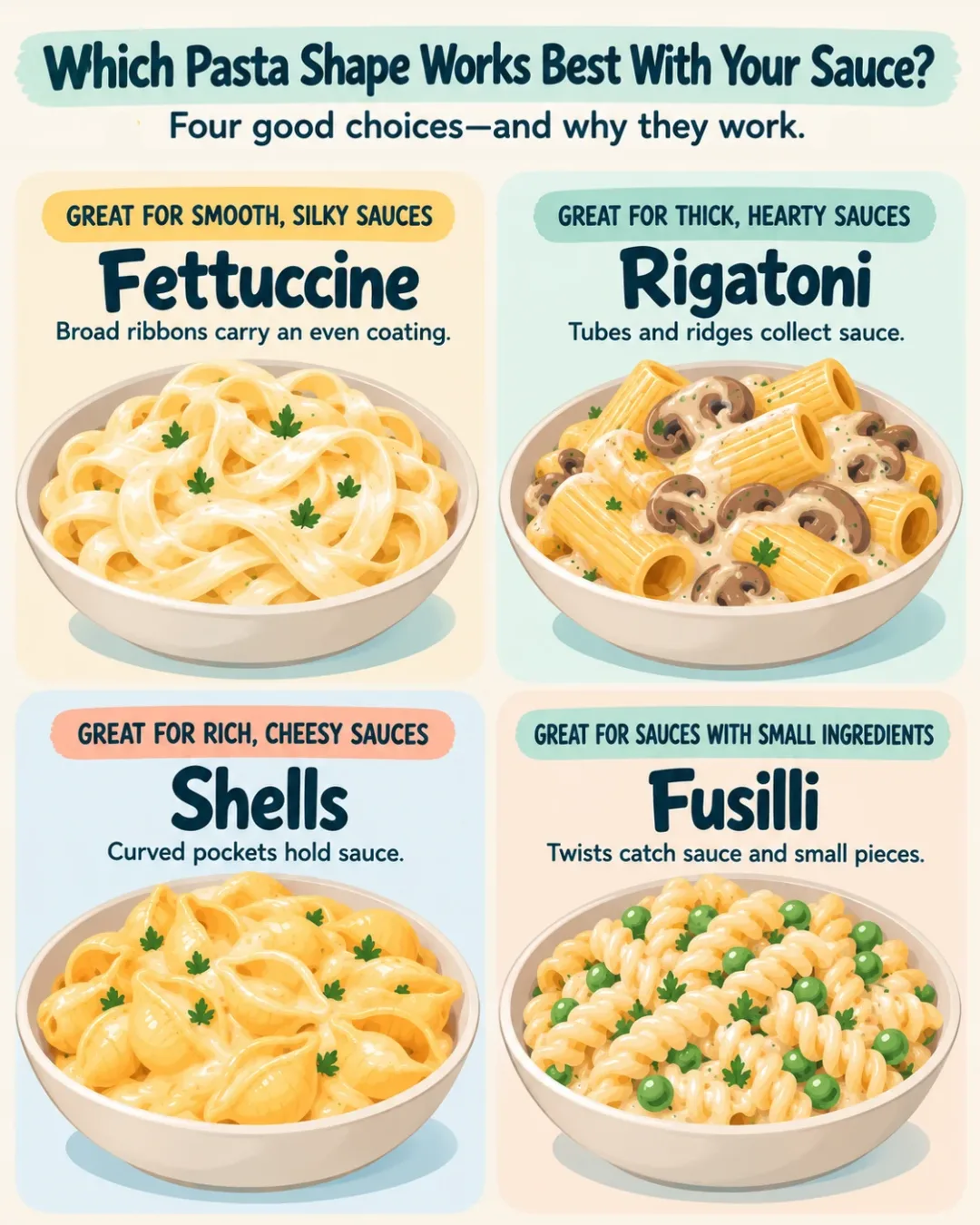
The best pasta for creamy sauce depends on what you’re making. Fettuccine is a great choice for a smooth Alfredo-style sauce, while rigatoni shines with thicker, heartier sauces. Shells and fusilli also have their advantages, especially when cheese, vegetables or other ingredients are involved.
So why do some pasta experts recommend rigatoni as the best?
Its ridges and hollow center give sauce plenty of places to collect. But catching sauce isn’t the only thing that matters. Smooth ribbons like fettuccine can carry a creamy coating without a single ridge.
The trick is matching the pasta to the sauce, not looking for one winner.
Even the Experts Don’t Always Choose Rigatoni
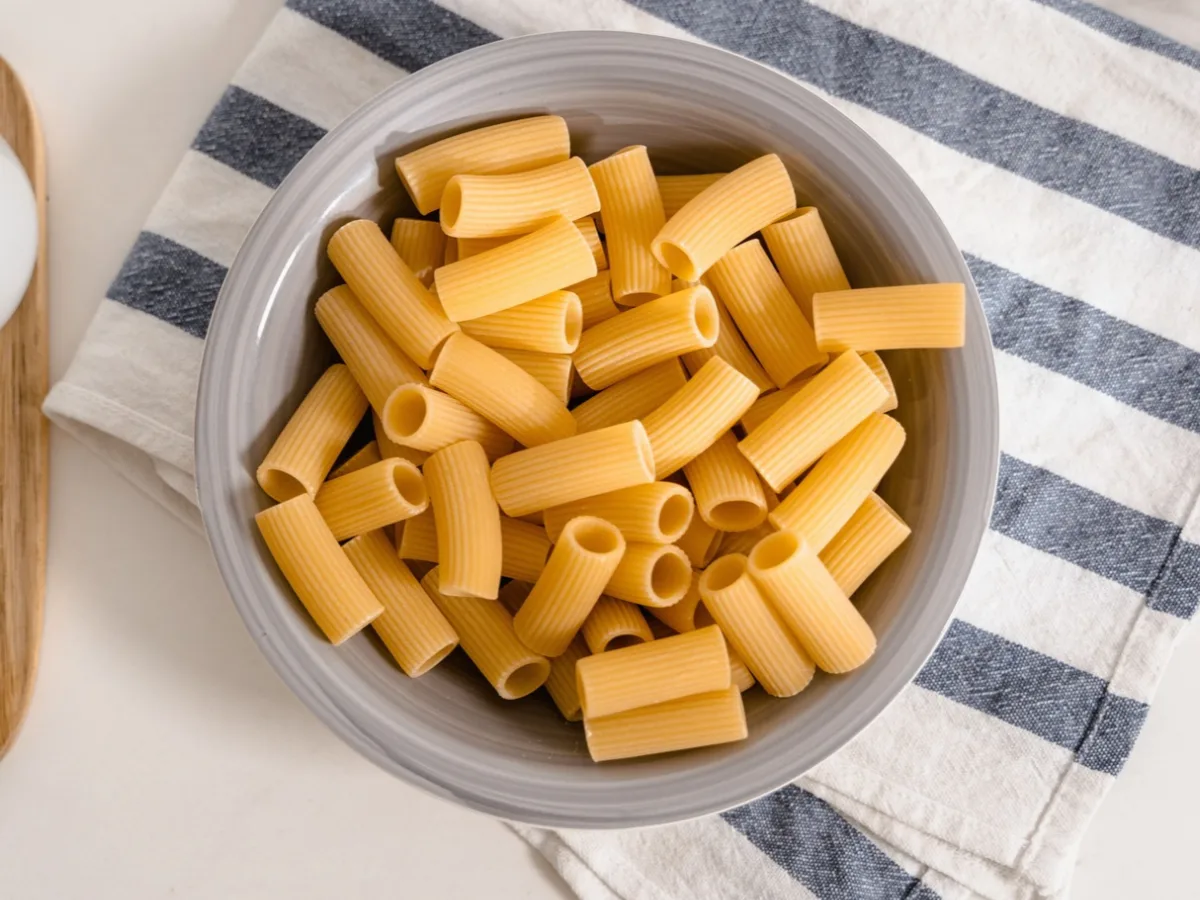
In a June 2026 Martha Stewart article, two pasta experts named rigatoni their top choice for creamy sauces.
Their reasoning? Its ridges and hollow center give sauce plenty of places to collect.
But here’s where things get interesting.
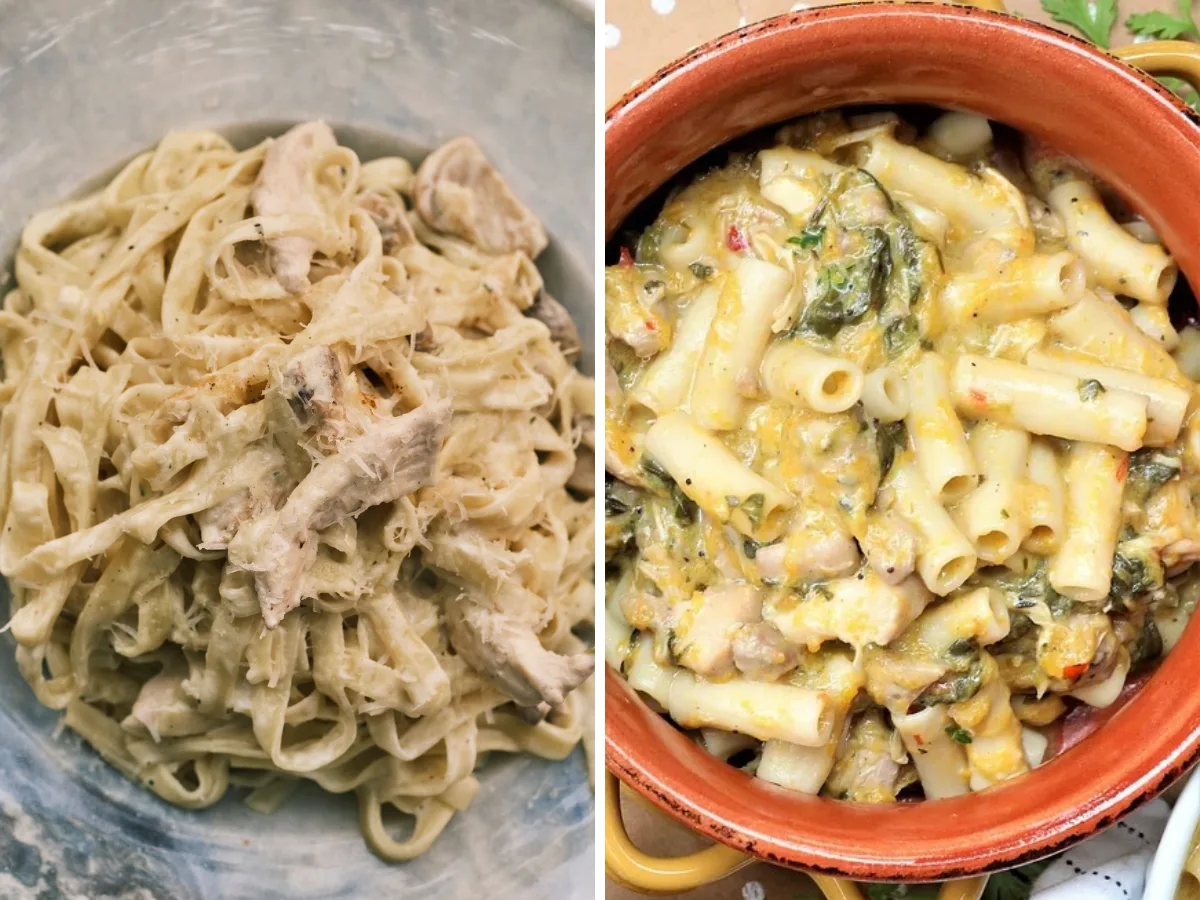
Another Martha Stewart recipe for creamy chicken pasta recommends broad, flat ribbons like pappardelle instead of rigatoni or penne.
So which recommendation is right?
Both can be. One is general advice, while the other is tailored to a particular dish.
Rigatoni collects sauce in its ridges and tubes, while broad ribbons carry a creamy coating along their surfaces.
The takeaway? There’s no single best pasta for every creamy sauce. What works best depends on the sauce you’re making.
Which Pasta for Your Creamy Sauce Should You Actually Choose?
The sauce matters, but so does what’s going into it. Here’s where the choice gets interesting.
Making Alfredo? Start With Fettuccine
A smooth Alfredo-style sauce works well with broad ribbons because there’s plenty of surface for the sauce to coat.
Tagliatelle and pappardelle are good alternatives. You can use rigatoni, too, but you’ll get a different experience, with more sauce collecting inside the tubes.
Making Creamy Mushroom Pasta? Look at the Mushrooms
If you’re using a thick sauce with finely chopped mushrooms, rigatoni or fusilli can work well because their shapes catch sauce and smaller pieces.
But if you’re using larger mushroom slices in a silky cream sauce, fettuccine or tagliatelle can be just as appealing.
The deciding factor isn’t simply whether the sauce contains mushrooms. It’s the texture of the finished dish.
Making a Rich Cheese Sauce? Try Shells or Cavatappi
Shells are a natural choice because their curved centers can hold cheese sauce. Barilla’s pairing guide also recommends shells for creamy macaroni and cheese.
Cavatappi’s hollow, curved shape also gives the sauce places to collect. Both are particularly useful when you want a creamy, cheesy bite rather than long strands coated in sauce.
Adding Peas, Bacon or Small Vegetables? Consider Fusilli
Fusilli’s spirals can catch smaller ingredients as you toss everything together.
That doesn’t mean you need fusilli whenever peas are involved. Rigatoni, penne and shells can also work. But spirals are worth considering when you want the smaller ingredients distributed throughout the pasta.
Can You Use a Different Pasta Shape With Creamy Sauce?
Absolutely, but some pasta shapes are better suited to certain sauces than others.
Fettuccine, rigatoni and shells are recommended for good reasons. Their shapes affect how sauce coats the pasta, collects in pockets or mixes with other ingredients.
But if you don’t have the recommended shape, you can still make a good creamy pasta dish.
- Only have spaghetti? It can replace fettuccine, although its thinner strands give you a different sauce-to-pasta experience.
- Have elbow macaroni? Its curved tubes work particularly well with thick, cheesy sauces, but you can use it with other creamy sauces too.
- Got penne or shells? Both can work with a variety of cream sauces, even when the recipe recommends something else.
The bottom line: The recommended shape is a good starting point, not a strict rule. Use what you have, but expect the sauce to coat or collect a little differently depending on the pasta.
The Pasta Shape Matters, but So Does How You Finish the Sauce
Ever made creamy pasta only to find a pool of sauce sitting at the bottom of the bowl?
Changing pasta shapes isn’t necessarily the answer.
A few simple steps can help:
- Finish the pasta in the sauce. Toss the cooked pasta with the sauce in the pan rather than simply pouring sauce over it on the plate.
- Save some pasta cooking water. Add a little at a time if the sauce needs loosening so it can coat the pasta more evenly.
- Adjust the consistency. If the sauce is too thin, it may collect at the bottom instead of coating the pasta the way you want.
These steps can make a difference whether you’re using fettuccine, rigatoni or macaroni.
Keep Exploring
- Why Do We Salt Pasta Water? — Does adding salt really make a difference to your pasta?
- Explore Our Food Guides — More answers to everyday cooking questions.
