
The best way to reheat mac and cheese depends entirely on the kind you made:
- Creamy stovetop mac: Reheat on the stovetop with a splash of milk or cream.
- Baked mac and cheese: Reheat in the oven, covered with foil, with added moisture.
They behave differently because stovetop mac has a sauce that breaks easily, while baked mac dries out fast. Below, you’ll get simple instructions for both, plus fixes for mac that turns dry, oily, or clumpy.
The Best Way to Reheat Creamy Stovetop Mac and Cheese (Stovetop Method)
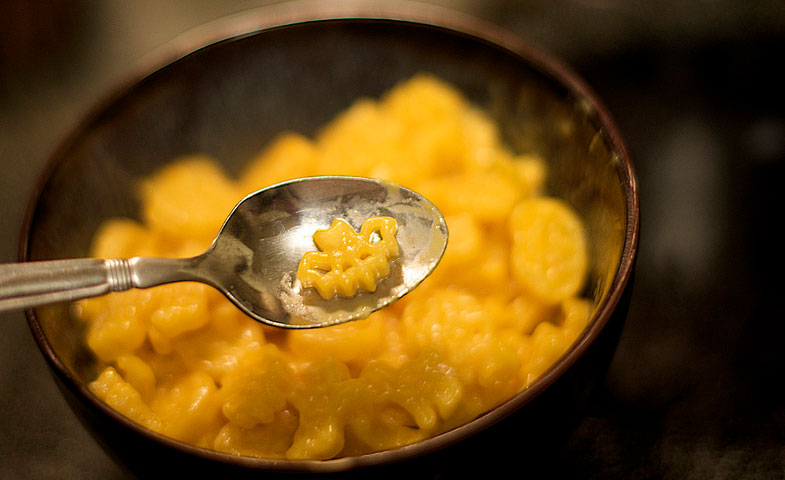
If your mac and cheese started as creamy stovetop mac, the stovetop is still the best way to bring it back.
I reheat mac and cheese constantly! Honestly, it feels like every other week. But what always makes it amazing is what a chef once told me:
“Fat is your best friend.”
She was right. Add a little fat back in, keep the heat gentle, and creamy mac becomes creamy again. No dryness. No graininess. No clumps.
How to Do It (Perfect Every Time)
- Add mac and cheese to a pan over low heat.
- Add 1–3 tablespoons of cream, milk, or even water.
- Add a small spoonful of butter (this is the secret).
- Stir slowly until smooth and creamy again.
- Add more liquid as needed, mac thickens as it heats.
Why It Works
- Cold pasta absorbs moisture → adding liquid gives it back.
- Butter/emulsified fat prevents sauce from breaking.
- Low heat keeps cheese smooth instead of grainy.
- This method gives you the closest-to-fresh texture of any technique.
Best For
- Stovetop mac
- Boxed mac
- Roux-based cheese sauces
- Restaurant leftovers
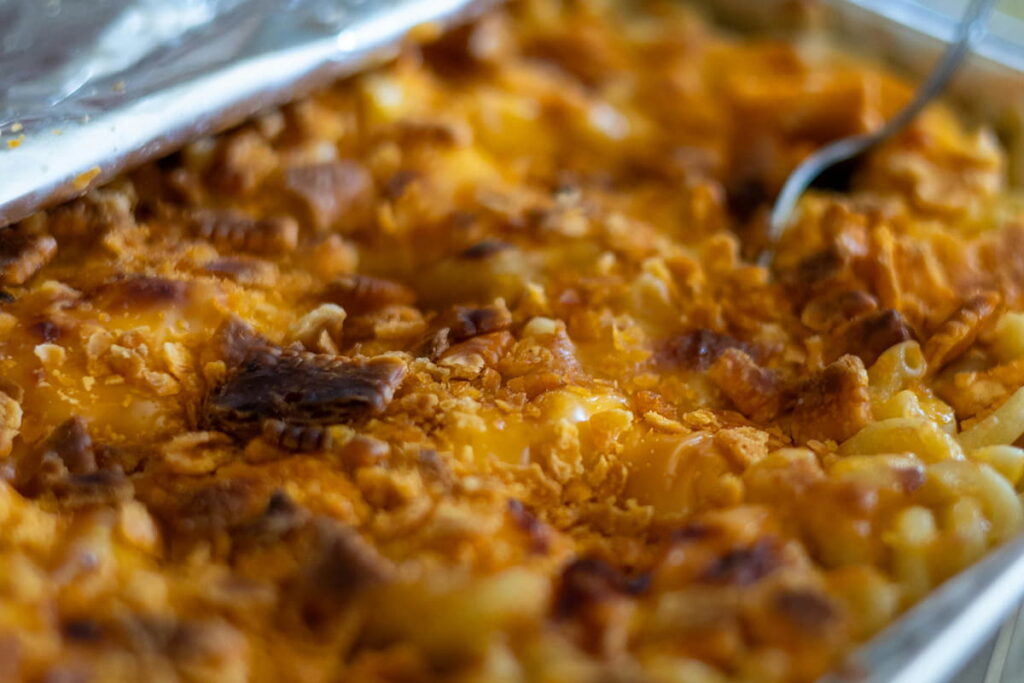
The Best Way to Reheat Baked Mac and Cheese (Oven Method)
Baked mac and cheese is a completely different beast. It’s meant to be firm, sliceable, cheesy, and structured, not loose and creamy like stovetop.
So, in this instance the oven is your best bet here. This is especially true for holiday leftovers (Thanksgiving, Christmas), which is where most people learn very quickly what doesn’t work.
How to Do It (No Dry Edges)
- Preheat oven to 350°F.
- Add mac and cheese to a baking dish.
- Splash in a few tablespoons of milk or cream around the edges.
- Cover tightly with foil.
- Bake 20–25 minutes (whole pan) or 10–15 minutes (single servings).
- Uncover for the last 3–5 minutes if you want the top crispy.
Why It Works
- Foil traps steam → rehydrates the pasta.
- Added liquid melts back into the cheese matrix.
- Gentle heat keeps the casserole structure intact.
- Crisping at the end restores the baked top.
Best For
- Baked mac casseroles
- Lasagna
- Crumb-topped mac
- Smoked mac
- Holiday leftovers
Fast Shortcut (If You Don’t Want to Wait for the Oven)
If you’re starving or your mac is ice-cold from the fridge, there is a quicker way. Some cooks (and one great TikTok below) take leftover baked mac, toss it into a saucepan, add a splash of milk or cream, and warm it low and slow while stirring.
It won’t stay sliceable like true baked mac, but it actually turns out surprisingly creamy and reheats way faster.
The Best Alternatives (Ranked)
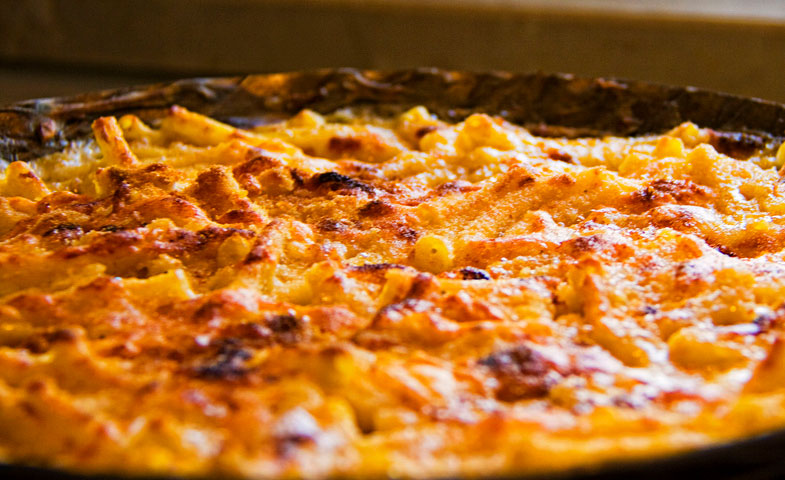
Here are some of the other methods that work and I use every now and then.
Microwave (Fastest + Works for Both Styles)
Microwave gets a bad reputation, but if you add moisture and cover it, it absolutely works — for creamy stovetop mac and baked mac. Is it perfect? No. Is it fast and effective? Yes.
How to Do It
- Add mac and cheese to a bowl.
- Add a splash of milk or cream + a bit of butter.
- Cover with a plate or microwave lid.
- Heat 30–45 seconds at a time, stirring in between, until creamy.
Why It Works
Microwaves heat water molecules, not fat.
→ Without added liquid + fat, the sauce dries out and the cheese breaks.
This fixes both.
Best For
- Quick lunch
- Small portions
- Both baked and creamy mac
- “I’m starving and don’t want to wait 25 minutes” moments
Note: Cold spots happen — that’s the trade-off. Stirring fixes it.
Air Fryer for Baked Mac (For Crispy-Top Lovers)
Only really works for baked mac and cheese — the structured kind.
How to Do It
- Add a little milk around the edges.
- Cover tightly with foil (critical).
- Air fry at 320°F for 8–10 minutes.
- Remove foil for the last 2 minutes to crisp the top.
Why It Works
Air fryers dry foods out fast.
→ Foil traps steam so the inside softens while the top crisps.
Best For
- Baked mac casseroles
- Crumb-topped mac
- Leftover smoked mac
How to Fix Dry, Grainy, or Broken Mac and Cheese
You’ve reheated it; now here’s how to fix the problems.
- Dry?: Add cream, milk, or even pasta water. Warm low and slow.
- Grainy?: You used too much heat. Fix with: 1–2 tbsp cream + 1 tsp butter, gentle heat, constant stirring.
- Oily?:Sauce separated. Fix with: whisk 1 tsp flour into 1–2 tbsp milk, then stir in.
- Clumpy?: Break it up with a splash of milk + whisk until smooth.
What Never Works Well (Mistakes to Avoid)
- Microwaving uncovered → instant dryness
- Reheating on high heat → cheese breaks
- Adding only water → thins but doesn’t emulsify
- Skipping fat → butter helps the sauce come back together
- Broiler only → browned top, cold center
- Oven without foil → dry edges
- Reheating baked mac on the stovetop → loses structure
What to Read Next
That’s everything you need for perfectly reheated mac and cheese.
If you want more no-fluff, actually-tested kitchen guides, here are a few worth checking out:
