
There isn’t one right time to add cheese to scrambled eggs. It depends on the cheese, specifically how it melts and how much moisture it contains:
- Cream cheese (and other soft cheeses): fold in off heat
- Shredded cheeses (cheddar, Jack, Swiss): add at about 75% doneness
- Cottage cheese (and other high-moisture cheeses): add early or blend first
Everything below explains why this works and how to avoid common mistakes.
When to Add Cheese to Scrambled Eggs (Quick Lookup)
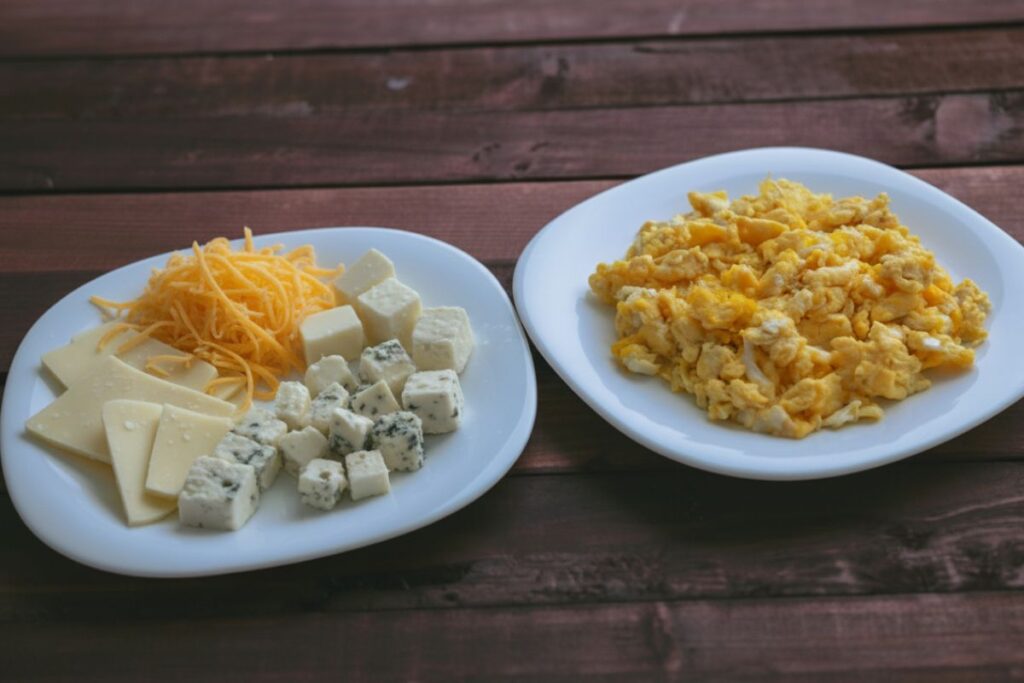
Use this table to find your cheese and add it at the right time, no guessing required.
| Cheese | Category | When to Add |
| Cream cheese | Soft, fat-rich | Off heat |
| Cottage cheese | High-moisture | Early or blended |
| Ricotta | High-moisture | Early or blended |
| Fresh goat cheese | High-moisture | Early or off heat |
| Cheddar | Shredded, melting | ~75% doneness |
| Monterey Jack | Shredded, melting | ~75% doneness |
| Swiss | Shredded, melting | ~75% doneness |
| Gruyère | Shredded, melting | ~75% doneness |
| Parmesan (finely grated) | Low-moisture | Off heat |
| Feta (crumbled) | Semi-moist | Off heat |
If you’re still deciding which cheese to use, we also break down the best cheeses for scrambled eggs, depending on the texture and flavor you’re after.
Why Cheese Timing Changes the Texture of Scrambled Eggs
I used to think adding cheese to scrambled eggs was simple, just toss it in at the end and call it a day. That advice works sometimes, but not always. After enough disappointing eggs (and more than a few conversations with a chef friend who’s way more patient than I am), it became clear: cheese doesn’t just melt into eggs. It changes how they cook.
- High-moisture cheeses (cottage cheese, ricotta, fresh goat cheese) release water as they heat. Add them at the wrong time and that moisture leaks into the eggs, leaving loose or watery curds.
- Shredded, melting cheeses (cheddar, Swiss, Monterey Jack) melt quickly, but only in a narrow window. Too early and you overcook the eggs waiting for melt; too late and the cheese never fully blends.
- Soft, fat-rich cheeses (cream cheese, Boursin) don’t truly melt, they soften and emulsify. Added over heat, the fat can separate and turn the eggs greasy instead of creamy.
Once you start matching the cheese to the right moment, the texture problems disappear and the eggs stay soft, creamy, and evenly cheesy.
Why Cold Cheese Ruins Scrambled Eggs (and What to Do Instead)
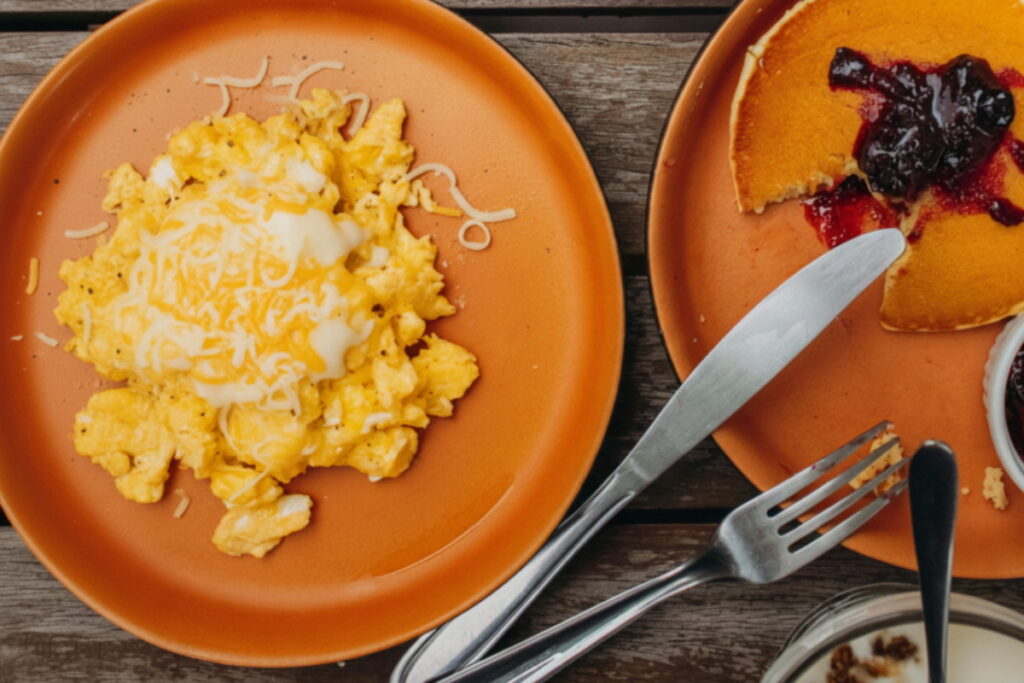
By now, we’ve seen that different cheeses behave differently in scrambled eggs, but temperature plays a big role too. Adding cold cheese straight from the fridge works against you, especially with melting cheeses.
Here’s what happens when cold cheese hits the pan:
- It drops the temperature of the eggs, slowing cooking at the worst moment
- You end up keeping the eggs on the heat longer, which tightens the curds
- The cheese melts unevenly, leaving rubbery eggs with half-melted bits
That’s why even the right cheese added at the right time can still give disappointing results.
What to Do Instead
Before you start cooking, take melting cheeses like cheddar, Monterey Jack, Swiss, or Gruyère out of the fridge and let them sit at room temperature for 15–20 minutes. Room-temperature cheese melts faster and more evenly, which means the eggs don’t have to stay on the heat longer than they should.
It’s a small step, but it makes everything that comes after much easier.
My Actual Process Now (The One That Works)
Here’s what I do these days, depending on the cheese:
For cheddar, Jack, Swiss, Gruyère:
- Take the cheese out of the fridge 15 minutes early
- Crack and whisk the eggs (no salt)
- Cook low and slow, stirring gently
- When the eggs are about 75% done (still glossy and wet in spots), stir in the cheese
- Kill the heat just before they’re fully set
- Taste, season if needed
For cottage cheese or ricotta:
- Whisk the cheese into the raw eggs until it looks like lumpy batter
- Cook low and slow
- Done
For cream cheese, Boursin, or Parmesan:
- Cook the eggs completely, turn off the heat
- Add the cheese and fold it in gently while the eggs are still hot
- The residual heat does the work
The One Seasoning Mistake That Ruins Cheesy Scrambled Eggs
Once timing and texture are right, seasoning is the final step, and this is where a lot of cheesy scrambles go wrong.
Cheese already brings a lot of salt. If you salt the raw eggs and then add cheeses like Parmesan, feta, or cheddar, you end up double-salting without realizing it. The eggs taste harsh instead of rich.
Before you go: don’t salt the eggs at the start. Add pepper if you like, let the cheese melt, then taste and adjust at the very end. Most of the time, the cheese has already done the work for you.
Before You Go: Flavor Comes Next
Timing does most of the work when it comes to cheesy scrambled eggs. Once you’ve got that down, flavor is the fun part.
If you want to keep going, you might like our guides on
Or, if you want to explore more, you can browse our egg cooking guides for simple, practical advice you can actually use.
