
Yes, you can freeze soda, but depending on the container, it can be risky if you’re not careful.
In my freezer:
- A 12-oz can usually starts freezing in 45–90 minutes
- A 16–20 oz plastic bottle takes closer to 2–3 hours
Because soda is sealed and under pressure, freezing it can lead to bulging, leaks, or even bursts if it’s left too long.
Below, I break down what’s actually happening when soda freezes, which containers are safest, and how to freeze soda without turning your freezer into a sticky disaster zone.
What Happens When Soda Freezes?
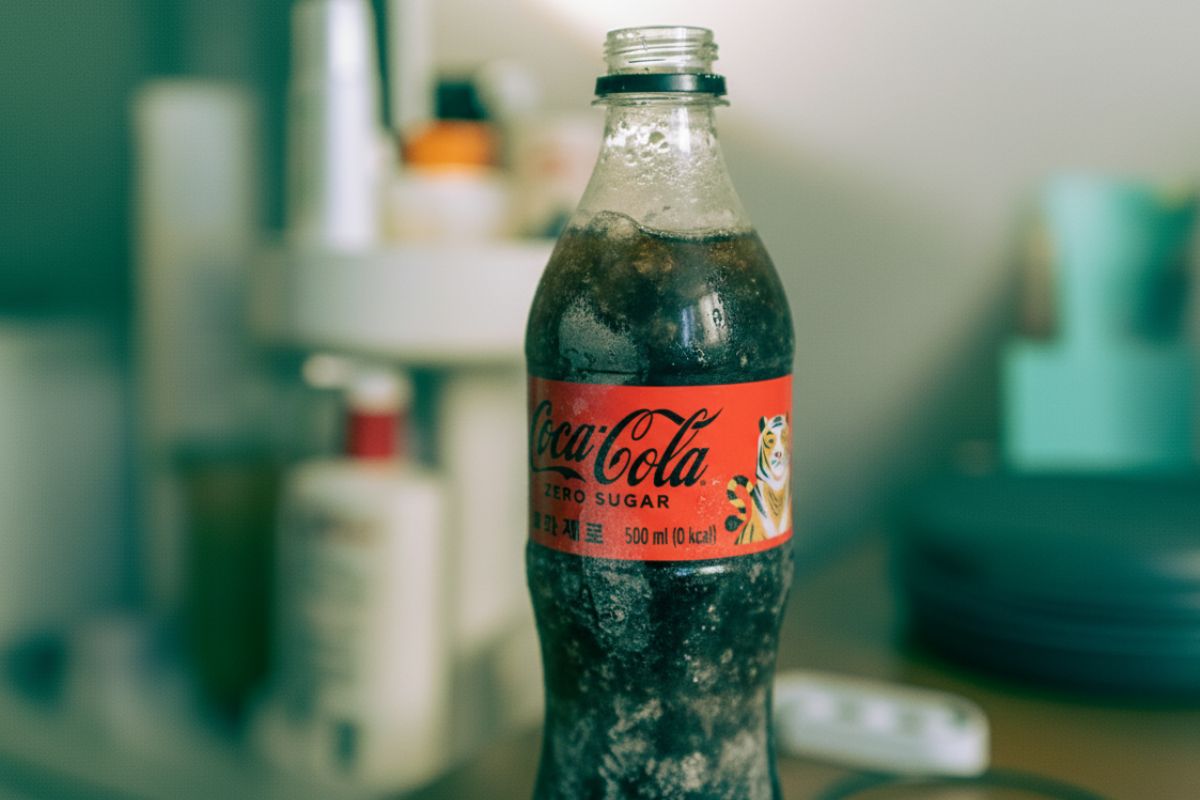
So, why can’t you just toss a sealed can or bottle in the freezer? It boils down to physics:
- Water expands by about 9% when freezing into ice (why icebergs float and pipes burst).
- Soda is mostly water, so expansion alone stresses the container.
- The real killer: Pressurized CO₂ (fizz). As ice forms, it forces dissolved CO₂ out of solution, spiking internal pressure.
- In rigid containers like aluminum cans or glass bottles, that pressure has nowhere to go, leading to bulging, cracking, or explosions.
The Three Stages of Freezing
- Slushy Stage (≈28–30°F / -2 to -1°C):
The sweet spot. Ice crystals form around the edges while most of the soda stays liquid. This is ideal for drinking if you catch it in time. - Partial Freeze (≈25–28°F / -4 to -2°C):
More ice builds up. Plastic bottles swell and harden, while cans often start bulging. - Full Freeze (below ~25°F / -4°C):
Solid ice throughout. Pressure peaks here, and cans or glass bottles are most likely to rupture, spraying frozen slush everywhere.
The trick: monitor closely and pull it out at the slushy stage, especially if you’re using plastic bottles. Set timers and check often. Turning a quick chill into a freezer cleanup isn’t worth it.
Freezing Soda by Container Type (Safest to Riskiest)
Look, I’ve learned this the hard way after a few too many freezer disasters, here’s the real breakdown on which containers you can trust (and which ones you absolutely shouldn’t).
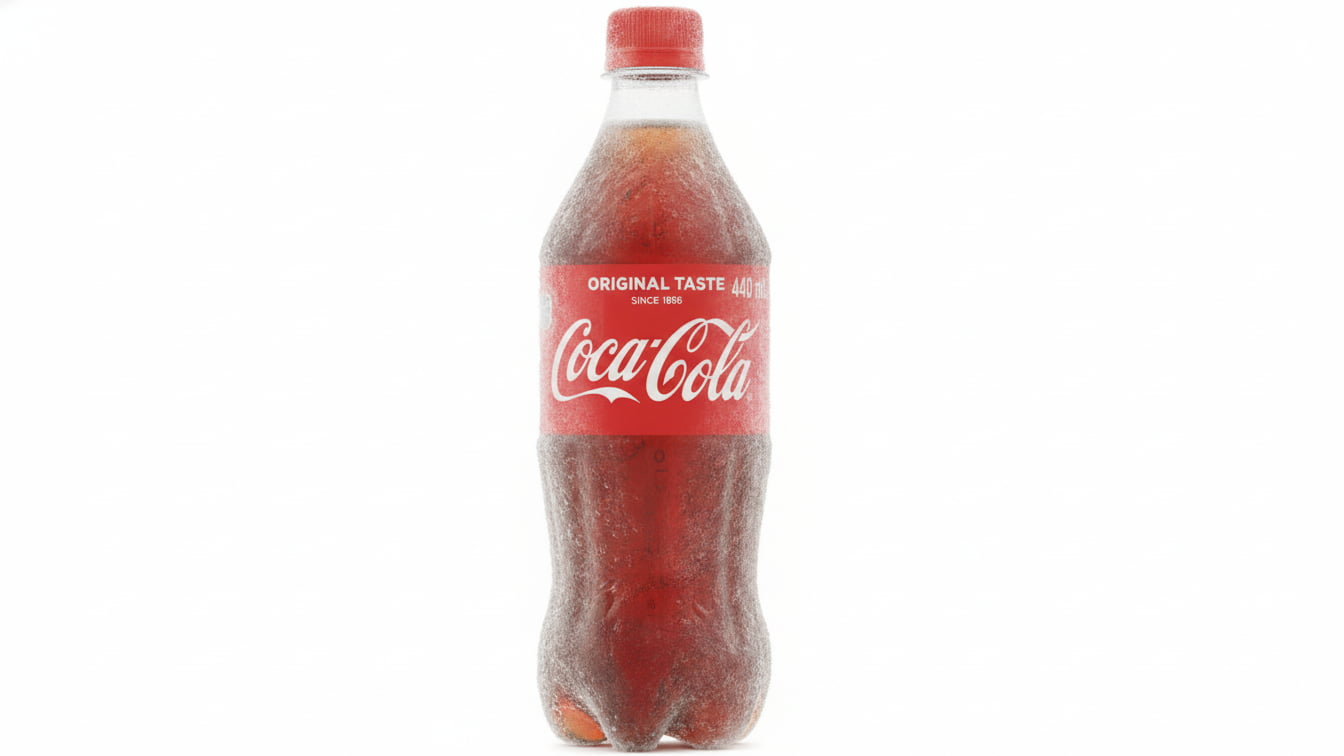
Plastic Bottles: Your Safest Bet (But Not Bulletproof)
Plastic bottles are the safest option for freezing soda or making slushies because they can flex as the liquid expands.
I freeze soda in plastic bottles all the time, usually 16-oz Coke, Sprite, or Mountain Dew, and I’ve never had an issue when I keep an eye on them.
- What happens: The bottle swells, gets rock-hard, and usually holds together.
- Why it works: It’s the same reason water bottles can freeze without exploding, the plastic has enough elasticity to handle expansion.
- Bonus: This is how you get that viral soda slushy texture.
- The catch: Leave it too long and even plastic can fail. I’ve had a 2-liter split and coat my freezer in frozen Coke syrup.
Safety tip: Before freezing, pour out about 15–20% of the soda to give it room to expand, and check it often, especially with larger bottles.
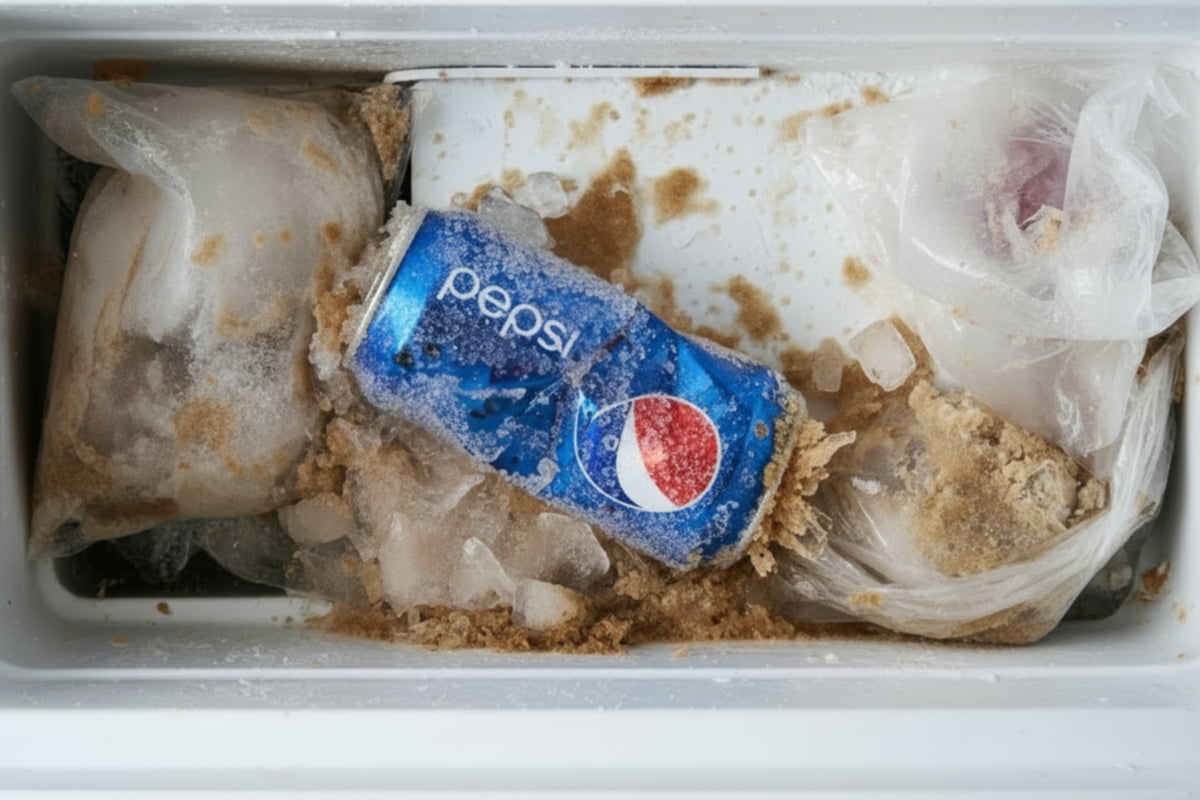
Aluminum Cans: High Risk – Avoid
I did this as a teen and regretted it instantly, the explosion woke the whole house. Rigid aluminum has zero give.
- Pressure builds fast as the soda freezes.
- The can bulges, then ruptures with surprising force.
- Cleanup is a nightmare, and injuries are possible, Live Science has reported on frozen soda cans exploding and causing serious injuries.
Bottom line: don’t freeze soda in cans. There’s no upside, and plenty of ways it can go wrong.
Glass Bottles: Absolutely Not
Glass is the worst option. It has zero flexibility, so when pressure builds, it doesn’t bulge, it shatters.
- This combines the biggest mess with real injury risk.
- When carbonated drinks freeze in glass, failure usually means sharp shards, not leaks.
As you can see, this is one of those shortcuts that almost always ends in regret.
How Long Until Soda Freezes (By Container Type)
Times vary depending on your freezer and starting temperature, but this is what I’ve seen from my own experience. Your results may differ.
| Container Type | Typical Time to Slushy Stage | Burst Risk |
| Aluminum Can (12oz) | Regular: 45–90 min Diet: 30–60 min | Very High |
| Plastic Bottle (16–20oz) | Regular: 2–3.5 hours Diet: ~10–20 min faster | Low–Moderate |
| Plastic 2L Bottle | 3–4 hours | Moderate |
| Glass Bottle | ~40–80 min (estimates only) | Extremely High (never do this) |
What I’ve Noticed:
- Diet freezes faster (less sugar = higher freezing point).
- Never tested glass, too many can disasters taught me to skip it.
- Always check early and often. Set multiple timers; every freezer is different, and forgetting even a plastic bottle overnight can lead to a split and sticky mess.
How to Make Perfect Soda Slushies Safely
Okay, now for the fun part! Here’s my tried-and-true method for creating those Instagram-worthy soda slushies without the safety risks:
The Safe Slushy Method:
- Start with a plastic bottle (20oz works best)
- Set a timer for 30-45 minutes for 12-16oz bottles, 1.5 hours for larger ones
- Check every 15 minutes after the initial timer goes off
- Look for ice crystals forming around the edges
- Remove when it’s slushy but still pourable
The Secret Technique:
Before opening your perfectly slushy soda, gently tap the bottle against your counter a few times. This helps settle the carbonation and prevents it from foaming over when you open it.
Never Open a Frozen Soda Without Thawing It
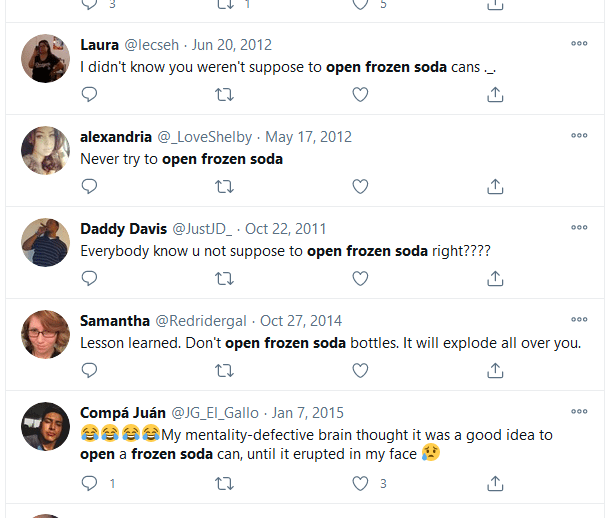
Opening a soda while it’s still frozen (or partially frozen) is a bad idea. When soda freezes, carbonation is forced out of solution and pressure builds inside the bottle. Crack it too early, and that pressure escapes fast, along with soda, slush, and foam.
I’ve learned this the hard way, and plenty of others have too.
(Tweet embed here)
How to Safely Thaw Frozen Soda
If it didn’t burst in the freezer, it’s not going to magically explode just sitting out. The real risk comes from forcing it to thaw too quickly, especially with heat.
Never use heat: no hot water, microwave, sunlight, or hairdryer.
Best thawing options:
- Cold water bath: 30–60 minutes (cold water only)
- Room temperature: 45–90 minutes, upright
- Refrigerator: 4–6 hours if you’re planning ahead
Quick (not ideal) hack: running it under cold tap water works, but wastes water. A bowl of cold water is better.
How to Open It Safely
- Make sure it’s fully thawed and still cold
- Point it away from your face and anything valuable
- Cover the top with a towel
- Open slowly, some foam is normal
Does Soda Taste Different After Freezing?
Yes, frozen soda is still safe to drink after it thaws, but honestly, I’m not a fan of how it tastes.
When soda freezes, carbonation escapes and the liquid separates. Once it thaws, you usually end up with flat soda that tastes weaker and a little watery. It’s drinkable, but it doesn’t have the fizz or bite that makes soda enjoyable in the first place.
If you care about taste, thawed soda is almost always a letdown.
Before You Go
If you still have questions about freezing drinks, you’re not alone. I’ve been testing what does and doesn’t work in the freezer for a while now, and this article is part of a bigger freezing hub where I break it all down.
And if there’s something specific you want to know, feel free to ask. Chances are, I’ve already tried it… or learned the hard way..
