

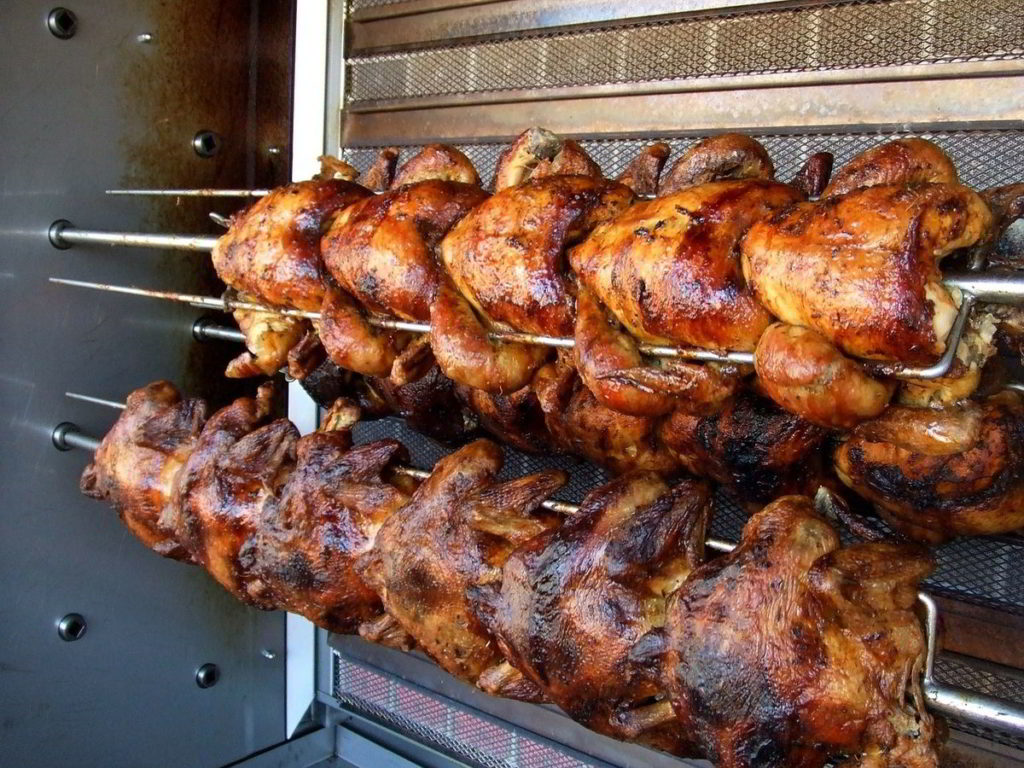
Rotisserie chicken is one of the best $6 shortcuts in the grocery store, until you try to reheat it. Day-two chicken has a special talent for becoming stringy in the microwave, rubbery in the oven, or disappointingly soggy everywhere else.
I’ve mangled it enough times to figure out something important:
There isn’t one “best” way to reheat rotisserie chicken.
There’s only the best way for the result you want.
If you want juicy meat, use the oven.
If you want crispy skin, use the air fryer.
If you need speed, the microwave works.
And if you want convenience, the stovetop is surprisingly great.
Here’s how each method performs.
What You Actually Want When Reheating Rotisserie Chicken
Everyone wants to “reheat it perfectly,” but perfect means different things to different people. Some want:
- Juicy, tender meat
- Crispy skin, just like the day you bought it
- A fast method when you’re starving
- A low-effort option with almost no cleanup
- A way to reheat a whole chicken or multiple servings at once
Once you decide which result matters most, choosing the right reheating method becomes easy.
Here’s how each one performs.
If You Care Most About Juiciness → Use the Oven
Best for: moist breast meat, reheating a whole or half chicken
Why it works: gentle heat warms slowly and evenly
If your top priority is preventing dry chicken, the oven is the safest bet. It heats slowly, gives the meat time to rehydrate, and won’t zap the moisture out of the breast. And because the USDA’s safe temp for poultry is 165°F, the oven gets you there gently instead of blasting the meat.
How to Do It (Quick + Simple)
- Temperature: 350°F
- Cover: Loosely with foil for the first half
- Time:
- Cold-from-fridge chicken: ~15–25 minutes depending on size
- Room-temp chicken: closer to 10–15 minutes
- For whole chickens: carve or separate pieces for more even heating
- When to uncover: last 5 minutes if you want a bit of skin revival
Pros
- Consistently juicy
- Ideal for larger amounts
- Never rubbery
Cons
- Slower than other methods
- Skin won’t get super crisp
How I usually do it:
I warm it at 350°F, keep it loosely covered for about 10 minutes, then uncover it to wake up the skin. Cold pieces need a few extra minutes, I usually just check until it’s hot but not sizzling.
If You Want Crispy Skin → The Air Fryer Is Your Best Friend
Best for: maximum skin crispiness, reheating smaller pieces
Why it works: rapid circulating heat re-crisps fat in the skin
If texture is your priority, nothing beats the air fryer. It brings that grocery-store crackle back better than any other method.
How to Do It (Quick + Simple)
- Temperature: 360–380°F
- Time:
- Carved pieces: 4–7 minutes
- Bone-in pieces: 7–10 minutes
- Whole chickens:
Air fryers struggle with whole birds, carve first for best results. - Cold vs. room temp:
Cold pieces take ~2 minutes longer. - Placement:
Don’t stack; space the pieces so the air can circulate.
This gives crisp skin without drying the meat, as long as you don’t walk away and let it go too long.
If You’re in a Hurry → The Microwave Gets It Done Fast
Best for: speed, convenience, quick meals
Why it works/doesn’t: heats water molecules fast (good), too fast (bad)
The microwave isn’t glamorous, but sometimes you just to eat your rotisserie chicken reheated NOW .
And because microwaves heat by exciting water molecules, they can dry out the edges before the center even warms.
How to Do It (Quick + Simple)
- Power: Medium or 70% (high heat dries fast)
- Cover: Use a microwave-safe lid or even an inverted plate
- Moisture: Add 1–2 teaspoons of broth or water to prevent drying
- Time:
- Cold pieces: 1–2 minutes, checking halfway
- Room-temp pieces: ~45–60 seconds
- Best shape:
Carved or shredded heats much better than bone-in pieces.
This method won’t crisp anything, but if you’re mixing the chicken into soup, rice bowls, wraps, or tacos — it’s perfect.
Pros
- Fastest method
- Easiest
- Great for shredded chicken
Cons
- No crisp skin
- Can dry out edges
- Uneven heating unless sliced
Personal experience tip:
I’ve found that putting a damp paper towel under the plate keeps the bottom from drying while the microwave heats from above.
The Stovetop: The Underrated Option for Tender Meat
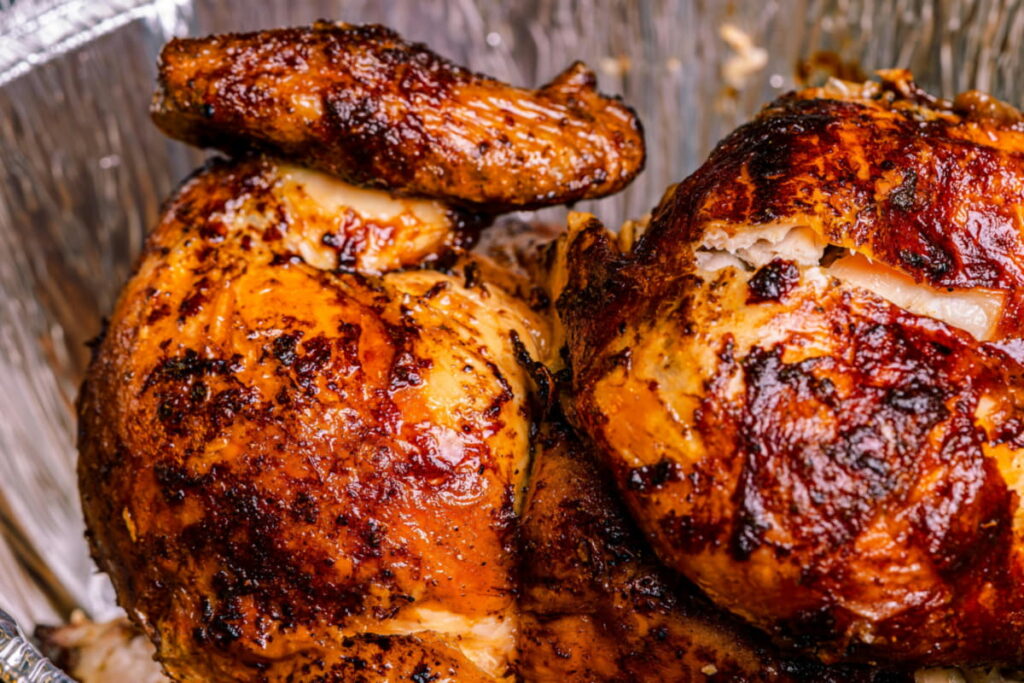
Best for: reheating carved chicken, especially dark meat
Why it works: gentle steaming keeps meat juicy
The stovetop is the sneaky middle ground, faster than the oven, less drying than the microwave, and no special appliances needed.
How to Do It (Quick + Simple)
- Pan: small skillet with a lid
- Liquid: 1–3 tablespoons of broth or water (just enough for steam)
- Heat: low to medium-low
- Time:
- Carved pieces: 5–8 minutes covered
- Shredded chicken: heats even faster (3–4 minutes)
- Cold vs. room temp:
Cold chicken may need an extra minute or two.
Keep the lid on, the steam does the heavy lifting.
Pros
- Very juicy results
- Great for shredded or carved chicken
- Quick and easy
Cons
- No crisping
- Not ideal for whole chickens
Personal experience tip:
I like adding a tiny bit of butter at the end for flavor, especially with breast meat, it restores some richness.
Reheating Larger Pieces or a Whole Chicken → Oven Works Best
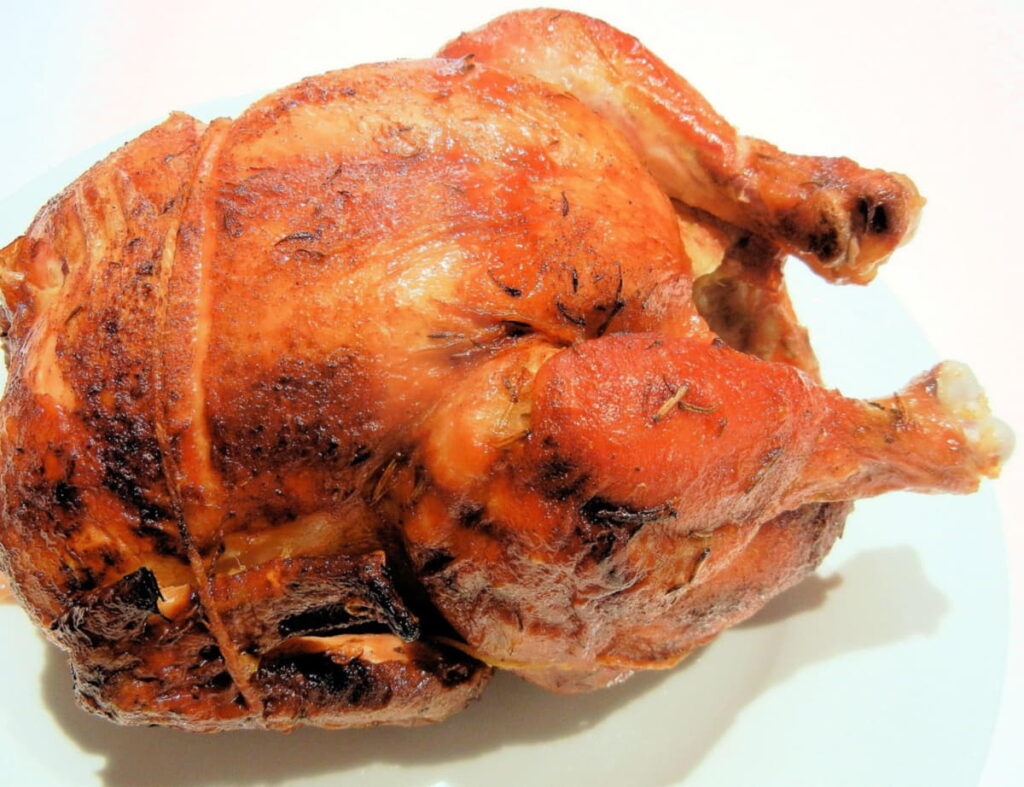
Best for: feeding multiple people, even heating
Why it works: ovens heat evenly across bigger pieces
Heating a whole rotisserie chicken intact sounds simple… until the outside dries while the inside stays cold. Carving solves that.
How to Do It (Quick + Simple)
- Method: oven only
- Temperature: 350°F
- Carve first:
Separate breasts, thighs, wings, drumsticks — everything heats evenly - Time:
- Cold whole chicken (carved): 15–25 minutes
- Room-temp chicken: ~10–15 minutes
- Cover: foil for the first half, then uncover
You can keep it whole if you must, but it won’t heat evenly, carving is worth the extra 60 seconds.
Pros
- Best for feeding groups
- Even, predictable heating
- Hard to mess up
Cons
- Slowest method
- Requires carving
Personal experience tip:
If I want to serve guests and keep the whole-chicken look, I reheat carved pieces, then reassemble them on a platter.
Choose What Works for You
Reheating rotisserie chicken doesn’t have to be complicated. Now that you know how each method behaves in real life, you can choose the one that fits the moment, whether that’s speed, convenience, juicy meat, or crispy skin. Done right, day-two chicken can taste way better than most people expect.
If you have questions or want to share a reheating trick of your own, feel free to leave a comment, I’d love to hear what works in your kitchen.
And if you’re curious about reheating other foods or want the best method for something specific, just let me know. I’m always testing new ideas and can turn them into a future guide.

I would like to try a turbo kettle methed .How do I do that?