
We wash apples. We rinse grapes. We scrub potatoes.
But bananas? They go straight from the counter to the peel to your mouth, no hesitation, no rinse, no guilt.
For years, I never questioned it either. Then I saw this tweet:
It had a ton of replies, split right down the middle.
Some people said “obviously not,” others swore they always rinse the stems.
That’s when I realized: maybe this wasn’t such a weird question after all.
Why Most People Don’t Wash Bananas
Let’s start with the obvious:
“Most of us skip the sink because we don’t eat the peel. It feels as unnecessary as washing an avocado. The logic feels airtight, like washing a candy wrapper.
But here’s the catch: most contamination happens by hand, not mouth. When you grab a banana, peel it, and touch the inside with the same fingers, whatever was on the surface just made the trip.
It’s called cross-contamination, and according to the U.S. Food and Drug Administration, it’s one of the most common ways foodborne pathogens get transferred to ready-to-eat foods.
The official guidance? “Even fruits with inedible peels should be washed before eating.”
Which means yes, technically, bananas count. It sounds very weird, but it makes sense.
“But I’ve Never Gotten Sick from a Banana”
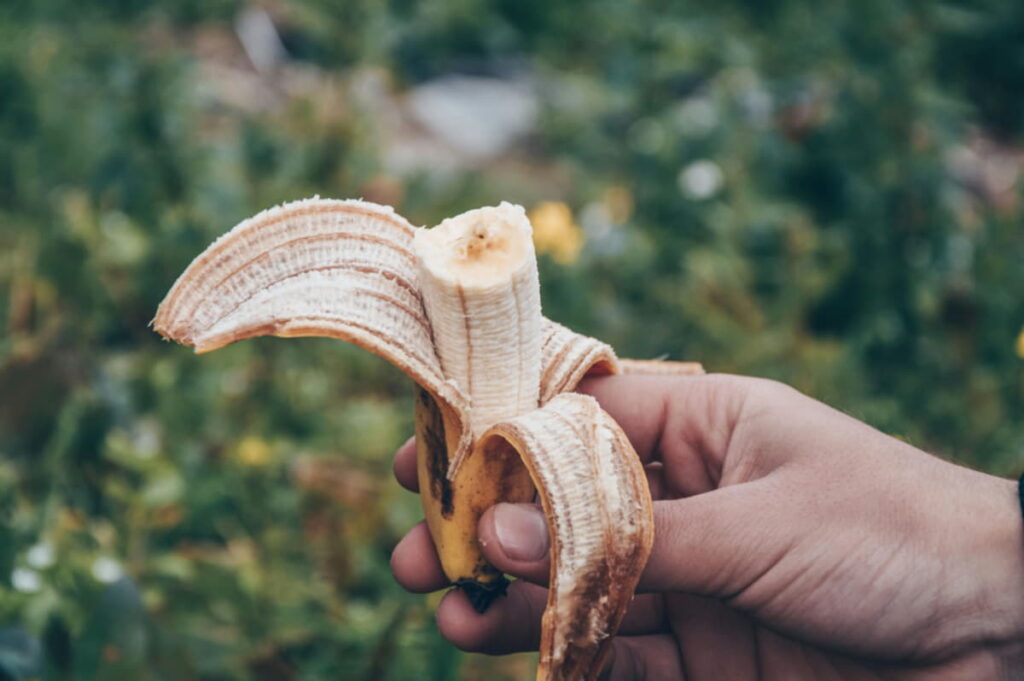
True. I am one of those. Most people won’t.
But that’s also what some people said about lettuce before the 2018 E. coli romaine outbreak the CDC spent months untangling.
Food safety isn’t about panic, it’s about probability.
And the probability that something might transfer from peel to fruit goes up if:
- You buy bananas in bulk and they sit for days.
- You handle other foods between grabbing one. (looking at you, cutting boards and countertops).
- You’re serving kids, the elderly, or anyone immunocompromised..
In those cases, rinsing under cool running water for 5 seconds isn’t paranoia, it’s just low-effort insurance.
What’s Actually on a Banana Peel?
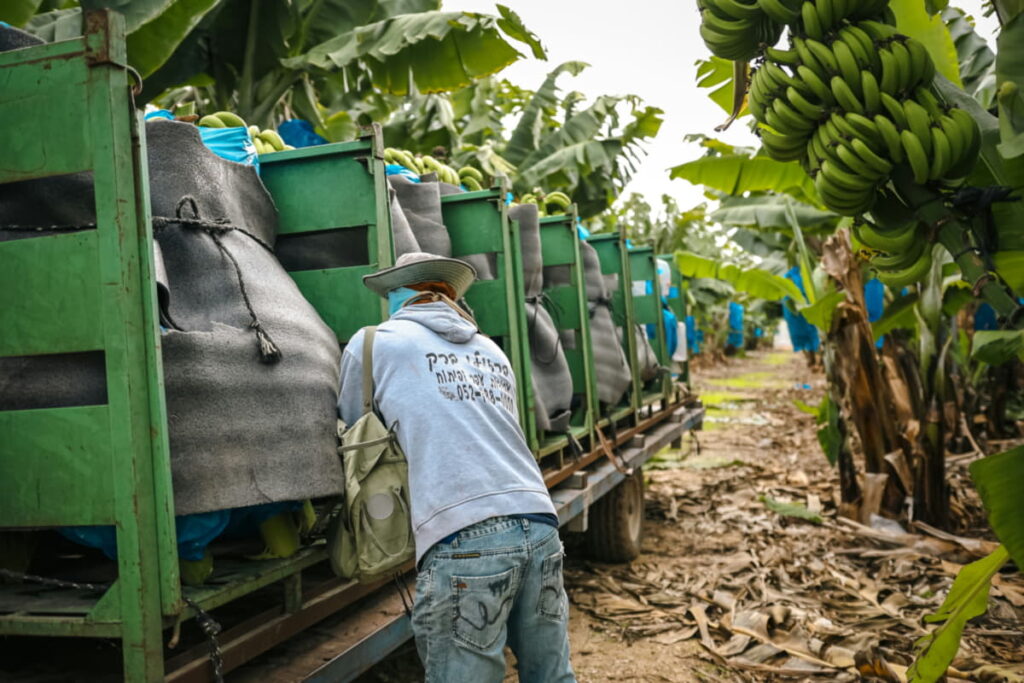
Here’s where it gets gross (but helpful).
Most bananas sold in North America and Europe are Cavendish bananas, and they travel a long way before they ever hit your fruit bowl. They’re shipped through post-harvest packing facilities, treated with ethylene gas to control ripening, and handled dozens of times along the supply chain.
Brands like Dole, Chiquita, and Del Monte follow these standard supply-chain steps. They’re packed, boxed, shipped, stored, and displayed.
Studies in food safety research consistently confirm that transport and retail handling increase microbial load on produce surfaces, especially smooth-skinned fruits like bananas.
For example, research on the survival of E. coli, Salmonella, and Listeria monocytogenes on banana peels during simulated transport strongly supports this.
In plain English: the outside of that banana has seen things.
And while most of what’s there is harmless, some bacteria (like Salmonella or Listeria) can survive on produce surfaces for days, especially in warm, humid storage.
So when you peel a banana without washing your hands first, or after, you’re playing a very small but real game of microbial roulette.
The Right Way to “Wash” a Banana
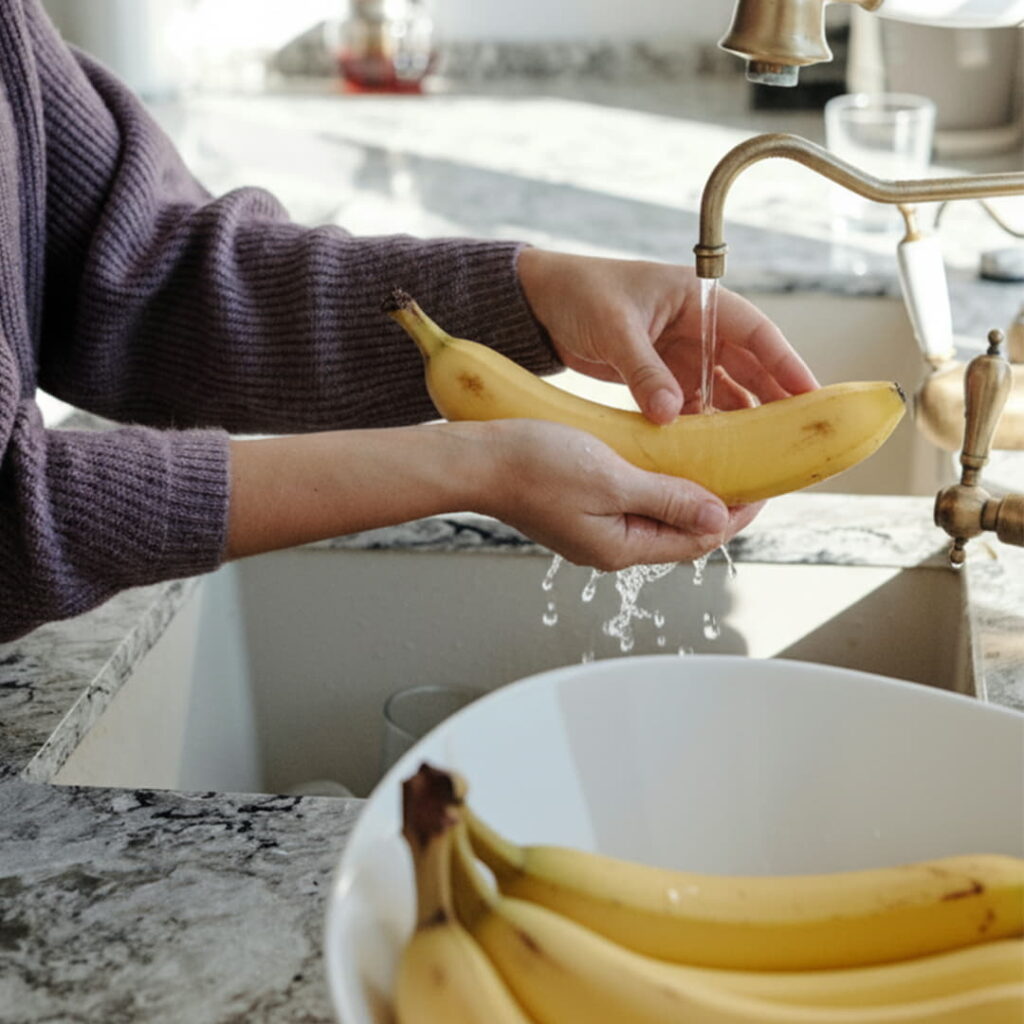
You don’t need a scrub brush or vinegar bath. You just need to remove surface residue without damaging the peel.
Here’s what food safety experts at the FDA and USDA recommend:
- Rinse under cool running water, before you peel it.
- Gently rub with your hands to loosen dirt or residue.
- Dry with a clean towel or paper towel (to avoid transferring moisture to the fruit).
- Then peel and eat.
No soap, no fancy sprays, just friction and fresh water. (The FDA specifically advises against using soap on produce.)
And if you’re freezing bananas for smoothies? Definitely rinse first. Freezer condensation can actually trap whatever’s on the surface.
The Internet Has Thoughts on the Washing of Bananas
If you look up “Washing bananas” on X (Twitter), you will often see intense debates, with strong opinions
For every person who swears by washing, another insists it’s overkill. But the more you watch people debate it, the clearer it becomes: nobody’s wrong, they just have different thresholds for risk and routine.
The Real Reason It Feels Weird
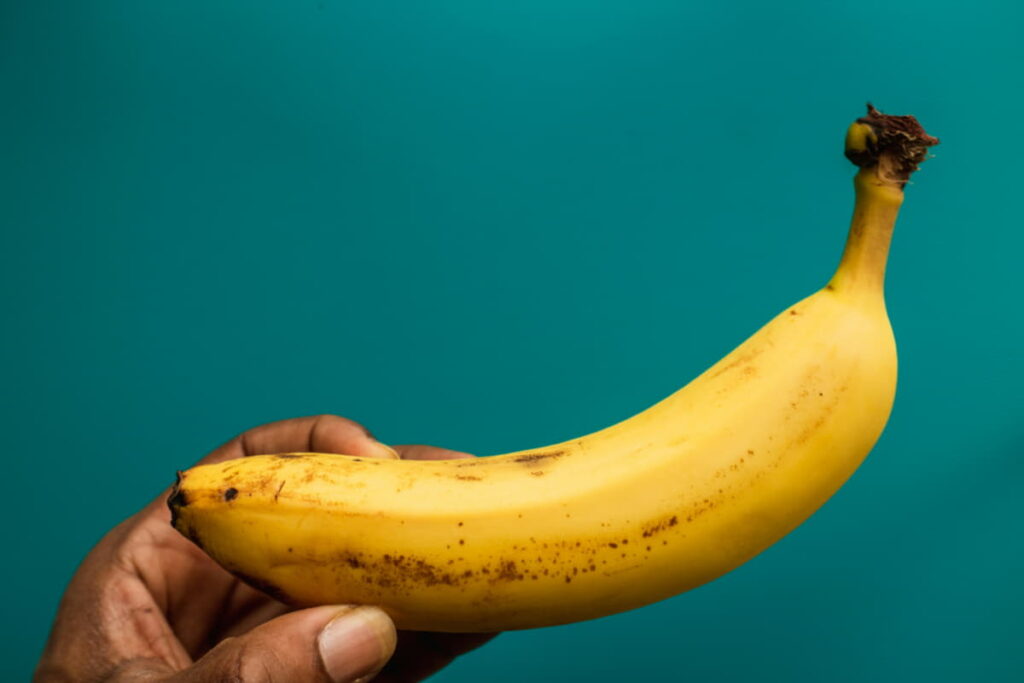
Washing bananas feels strange because it breaks an unspoken rule: that food with “natural packaging” doesn’t need attention.
We treat peels, shells, and skins as barriers, not surfaces. But food safety authorities (FDA, CDC, USDA) treat them as both.
And the more global our supply chain gets, the more those surfaces matter.
Think of it like washing your hands, not because you see dirt, but because you don’t.
So… Should You Wash Bananas?
Here’s the short, honest answer: You don’t have to.
But it’s smart to, especially before peeling, cooking, or freezing them.
It’s one of those 5-second habits that doesn’t change flavor or texture, but quietly makes your kitchen safer.
And if you’re trying to build better food-handling habits, I’ve also put together a quick guide on washing fruits and vegetables, basically all the produce people don’t think to rinse. It’s surprisingly eye-opening.
If you have questions or swear by your own routine, feel free to drop a comment. I love hearing how people handle this stuff in real life.
