

I reheat fried rice two ways: (1) on the stovetop for the best texture, and (2) in the microwave with a small moisture trick when I need something fast.
After ruining more leftovers than I’d like to admit, these are the only methods that consistently bring fried rice back to life instead of turning it dry, mushy, or strangely cold in the middle.
Below, I’ll show you exactly how I do both: the pan temperature, the timings, how much water to add, and the visual cues that tell you it’s heating evenly.
You’ll also see why leftover fried rice clumps, plus fixes for dry, soggy, or stubbornly cold portions.
Why Leftover Fried Rice Is So Easy to Ruin
Day-old fried rice isn’t the same as plain steamed rice, and that’s why it’s easy to mess up.
Here’s what actually happens in the fridge:
- The starch retrogrades: the rice grains firm up and cling together into dense clumps.
- The oil solidifies: it coats each grain and blocks heat from penetrating evenly.
- Eggs dry out and toughen.
- Vegetables release and re-absorb moisture at different rates than the rice.
- Proteins (chicken, shrimp, etc.) heat more slowly than the starches.
The result? Uneven heating. One bite can be steaming hot, the next is still cold, and the texture swings between mushy and chewy.
That’s why the usual “just microwave it” approach is not always the best. The two methods below solve these problems instead of fighting them.
The Only 2 Ways I Reheat Fried Rice That Actually Work
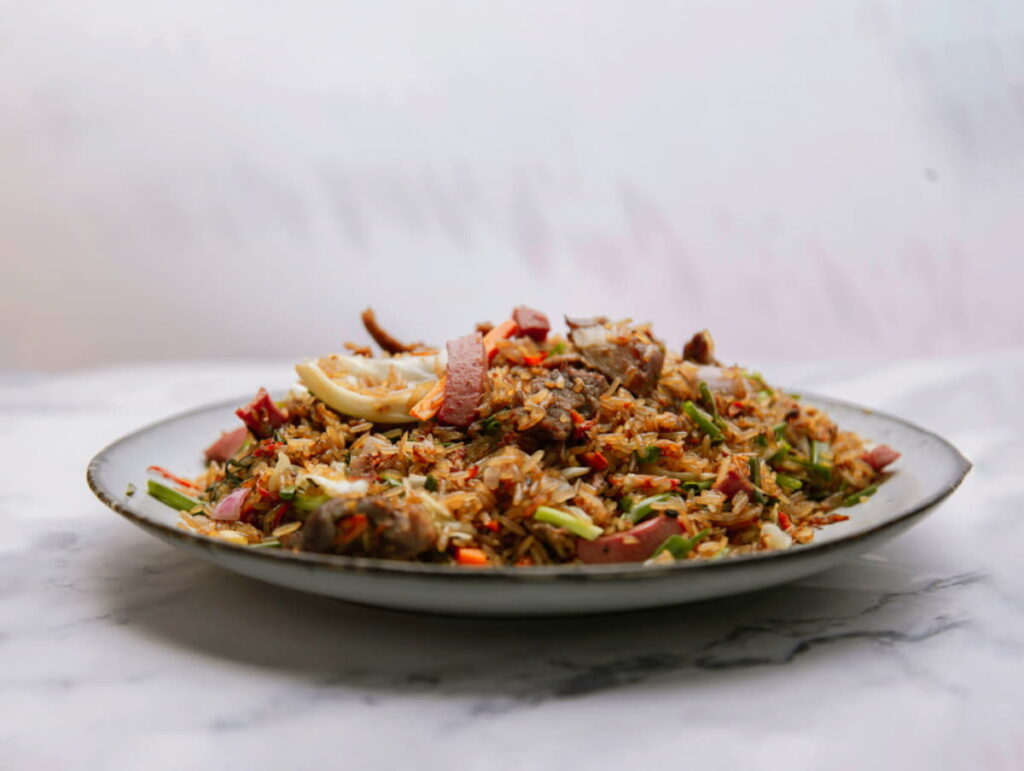
Stovetop Method: How to Make Day-Old Fried Rice Taste Like It Just Left the Wok
This is still my #1 method. When it’s done right, the rice comes out with individual glossy grains, a few crispy edges, and zero cold spots. And no, it doesn’t burn if you treat the heat with respect.
Why This Works So Well (and Why It Won’t Burn)
Most fried rice (especially takeout) already has plenty of oil in it from the original cooking. When that cold rice hits a properly hot pan, two things happen instantly:
- The cold rice drops the pan temperature way down (it acts like a heat sink).
- The solidified oil in the rice melts and becomes your cooking fat.
That combination is exactly why you almost never need extra oil and why the rice doesn’t scorch, it’s frying in its own fat at a safe temperature.
Exact Steps – No Guesswork Removed
- Start with a hot, dry pan Place a nonstick skillet or wok on the stove and set it to medium-high (6–7 out of 10 on most stoves). Let it heat for 60–90 seconds. Test: one grain of rice should sizzle the second it touches the surface.
- Add oil only if your rice looks dry
- Greasy takeout rice → add nothing.
- Homemade or older rice that looks matte → swirl in ½ teaspoon neutral oil. That’s it.
- Add the cold rice Drop the whole fridge-cold block in. Spread it into a rough single layer, then walk away for 60–90 seconds. Don’t stir yet. This lets the bottom grains crisp slightly and the starch relax so clumps break apart easily.
- Break and stir Flip sections with a spatula, the rice will separate almost by itself now. Keep the rice moving every 20–30 seconds after that. You’re just evening out the heat.
- Finish when it looks alive again Total time: 4–5 minutes. It’s ready when:
- Steam is rising from the center (not just the edges)
- Every grain is glossy and moves separately
- You dig to the bottom and it’s piping hot
- Season after reheating Soy sauce, sesame oil, scallions, all go in your bowl, never in the pan while it’s heating.
That’s the entire method. Hot pan + (usually) zero extra oil + cold rice + one minute of patience = restaurant-quality leftovers every single time. No burning, no mush, no drama.
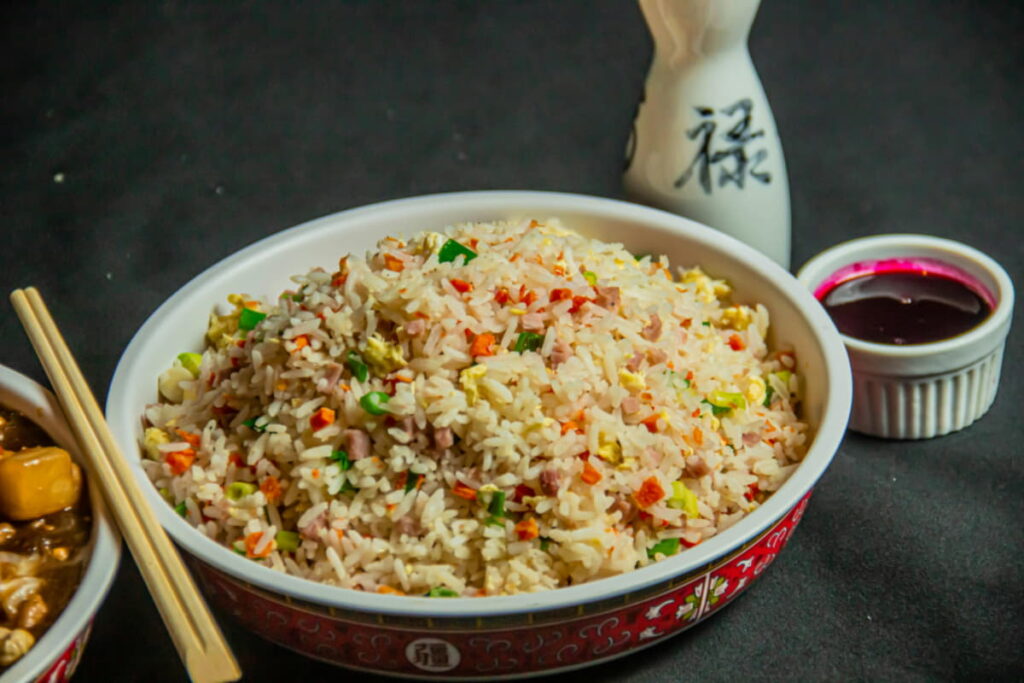
Microwave Method: The Lazy Way That Doesn’t Suck
Yes, the microwave can give you excellent fried rice in under 2 minutes – if you stop treating it like a heat bomb and start treating it like a tiny steam room.
Why This Works When Everyone Else Fails
The single biggest problem with leftover fried rice is lost moisture + uneven heating. This method fixes both at once with one measured teaspoon of water and short bursts.
Exact Steps – Never Mess It Up Again
- Break the clump first Use a fork (or your hands) to crumble the cold rice as much as possible. Don’t skip this – the microwave won’t do it for you.
- Spread it flat Wide, shallow microwave-safe bowl or plate. Make it an even layer, no mound in the middle.
- Add exactly 1 teaspoon of water per cup of rice That’s the magic number.
- Too little → dry
- Too much → soggy One level teaspoon is perfect for a normal takeout container (about 1½–2 cups).
- Cover correctly Lay a damp (not dripping) paper towel loosely over the top. No plate, no plastic wrap, no “microwave cover” with a vent – those trap too much steam and make it wet.
- Heat in short bursts
- 45 seconds on HIGH → remove, fluff thoroughly with a fork
- 30–45 seconds → fluff again
- Final 15–20 seconds if any cold spots remain Total time: 1½–2 minutes max.
- Check it’s done Lift the paper towel – you should get a face-full of steam and the bottom of the bowl should be hot. Stir once more. If a few grains are still cool, give it another 10–15 seconds.
What You’ll Get
Perfectly moist, individual grains that taste almost freshly made. No hard bits, no mush, no rubbery egg.
Common Mistakes That Ruin It
- One long 2–3 minute zap → hot edges, cold center
- Too much water → instant congee
- Tight lid or plastic wrap → pressure-cooker effect = wet rice
- Skipping the fluffing → steam gets trapped and goes soggy
Do it exactly like this once or twice and you’ll never go back to sad office-lunch rice again. Zero pans, 2 minutes, tastes like you tried.
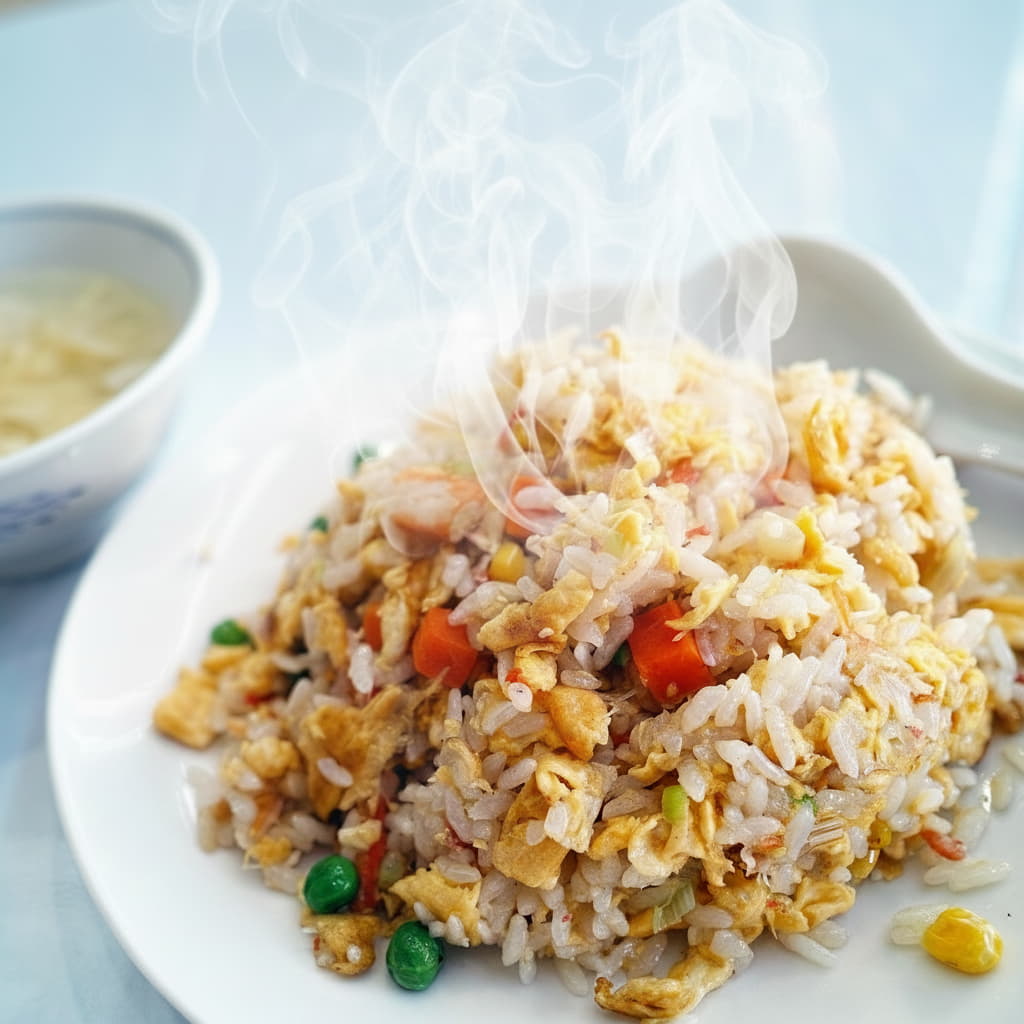
Stovetop vs Microwave: Which One Should You Use?
Here’s how I choose, nothing fancy, just real-life logic.
I use the stovetop when:
- The rice is greasy takeout fried rice
- I want that revived texture
- It’s clumpy and needs to be broken apart gently
- I’m reheating a large portion
I use the microwave when:
- It’s a work lunch
- It’s homemade rice that dried out
- I don’t want to wash a pan
- I’m only reheating a small portion
Occasionally I do both
If the rice is super clumpy, I’ll microwave it for 45 seconds just to loosen it,
then finish it in the pan for texture.
It’s cheating, but it works.
Quick Fixes for Dry, Soggy, or Clumpy Fried Rice
Here are the fast solutions I wish I’d learned years earlier:
- Rice is dry: Add ½–1 tsp water, fluff, reheat briefly.
- Rice is soggy: Spread it thin in a hot pan for 1–2 minutes to evaporate moisture.
- Still cold in the center: Break the clump open, fluff, and reheat in shorter cycles.
- Egg pieces turned rubbery: Reheat on medium heat (not high) or use the microwave, it’s gentler on proteins.
- Rice tastes flat: Add a drip of sesame oil or a pinch of salt after reheating (never during).
- Big clumpy block: Microwave 30–45 seconds to soften → then pan-fry to separate.
Food Safety: Don’t Get Food Poisoning from Leftover Rice
Leftover rice can grow Bacillus cereus, a heat-resistant bacteria that survives cooking. So when you reheat fried rice, it’s important to get it hot enough all the way through.
The safe temperature for reheating rice is 165°F (74°C), that’s the official guideline for all leftovers, rice included.
And honestly, you don’t need to pull out a thermometer every time. I’ve found that when fried rice is steaming hot all the way through, not just warm around the edges, it’s right where it needs to be.
Go Reheat Your Fried Rice Right Now (You Know Exactly How)
Master the stovetop for weekend wins, the microwave for workday survival, and the 45-second hybrid when you’re feeling extra lazy. Do any of these and your leftover fried rice will stop being “leftover” and start being “the part I actually look forward to.”
Now go rescue that container from the back of the fridge. It’s not going to reheat itself.
P.S. Got a full Chinese takeout spread dying in there? Here’s exactly how I reheat everything else so nothing turns into a tragedy:
→ The Ultimate Guide to Reheating Chinese Food (lo mein, orange chicken, egg rolls & more)
→ My full Reheating Hub – every takeout dish, ranked and rescued
