
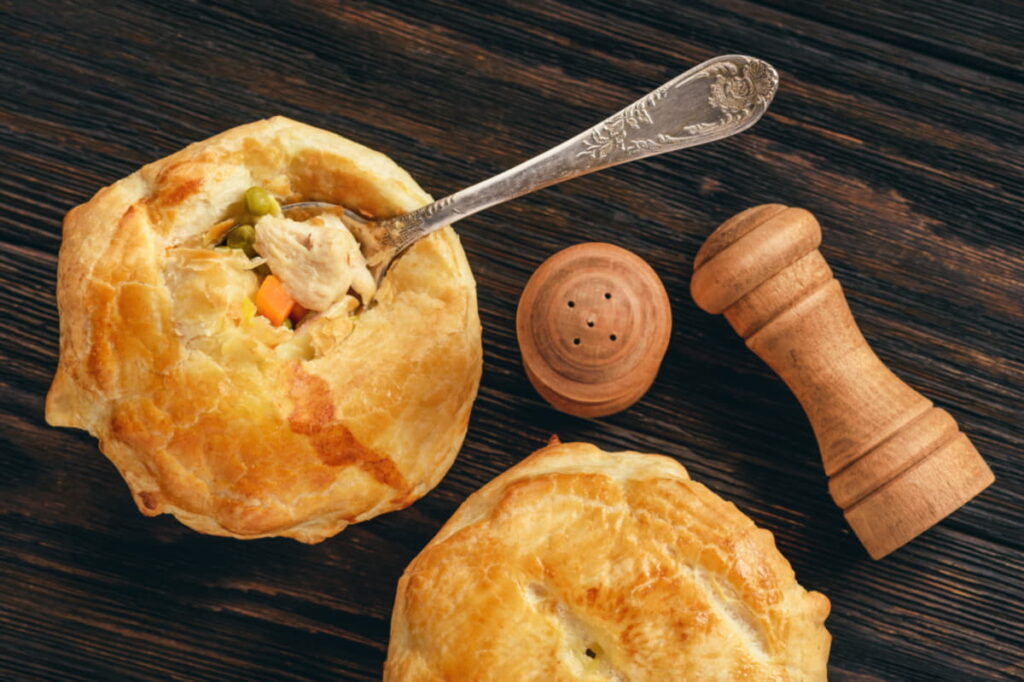
If you’re Googling how to reheat a chicken pot pie, I already know two things about you:
- You want that flaky, golden crust back.
- You don’t want a molten-lava top with a still-cold center (we’ve all been there).
I’ve reheated enough pot pies from homemade to store-bought, and I’ve learned n that pot pies behave nothing like regular leftovers. They’re sneaky. The crust and filling want different things, and if you treat them the same… something always goes wrong.
So this guide isn’t just “temperature + time.”
It’s the small, real-world adjustments that actually make the difference.
Let’s get into it.
Before You Reheat: Do These 4 Things for Better Results
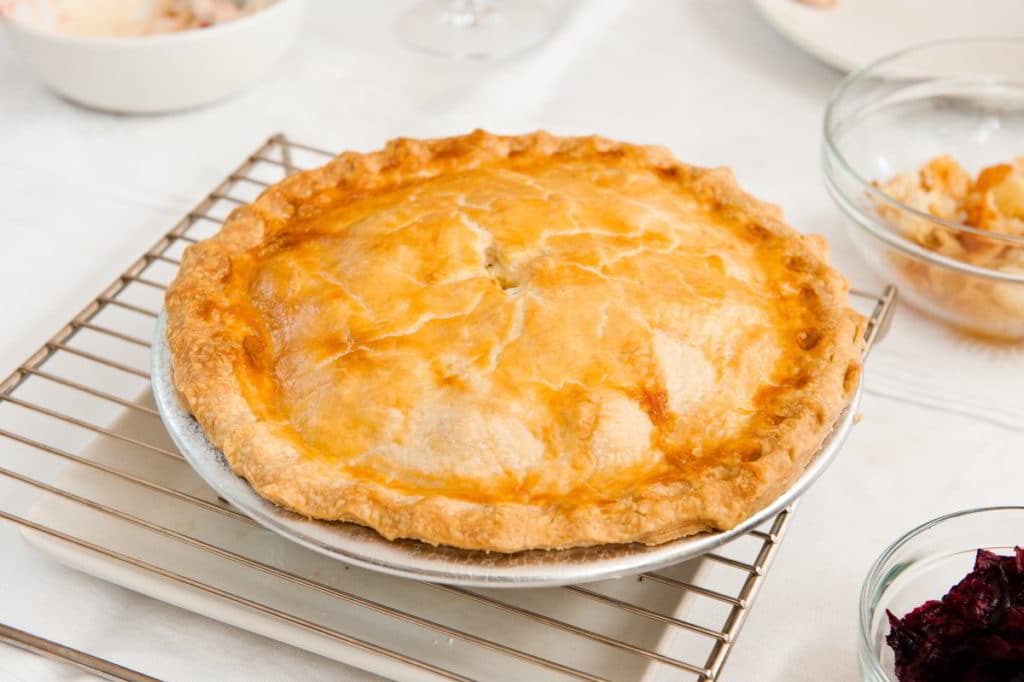
I’m lucky one of my closest friends is a chef, because she schooled me on this years ago. Turns out the way you treat a leftover pot pie before reheating makes a bigger difference than the actual method.
1. Let the pot pie come to room temp for 10–15 minutes
Cold filling + hot oven = burnt crust, cold center.
Letting it sit a bit:
- evens out the temp
- prevents the “overcooked edges, cold middle” problem
- reduces reheating time
(This one tip improves every method.)
2. If the pie is whole, DO NOT cut into it first
Cutting early creates two problems:
- exposed edges dry out
- steam escapes from the center too fast
Leave it whole. You want the filling to warm as a unit.
3. If the pie was stored in the fridge uncovered, revive the crust
Fridge air dries crust brutally. To fix it:
- Brush the top VERY lightly with milk or melted butter
- OR mist it with water (tiny amount)
This lets the crust rehydrate enough to crisp again.
4. If the bottom crust is soggy, line your reheating surface
Use:
- parchment
- or a preheated baking sheet
- or a cast iron skillet
This prevents the bottom from staying wet. It basically gives the steam somewhere to go.
Once you get these checked off, it will make warming up your pot pie that much easier.
Best Ways to Reheat Chicken Pot Pie (With Subtle Details)
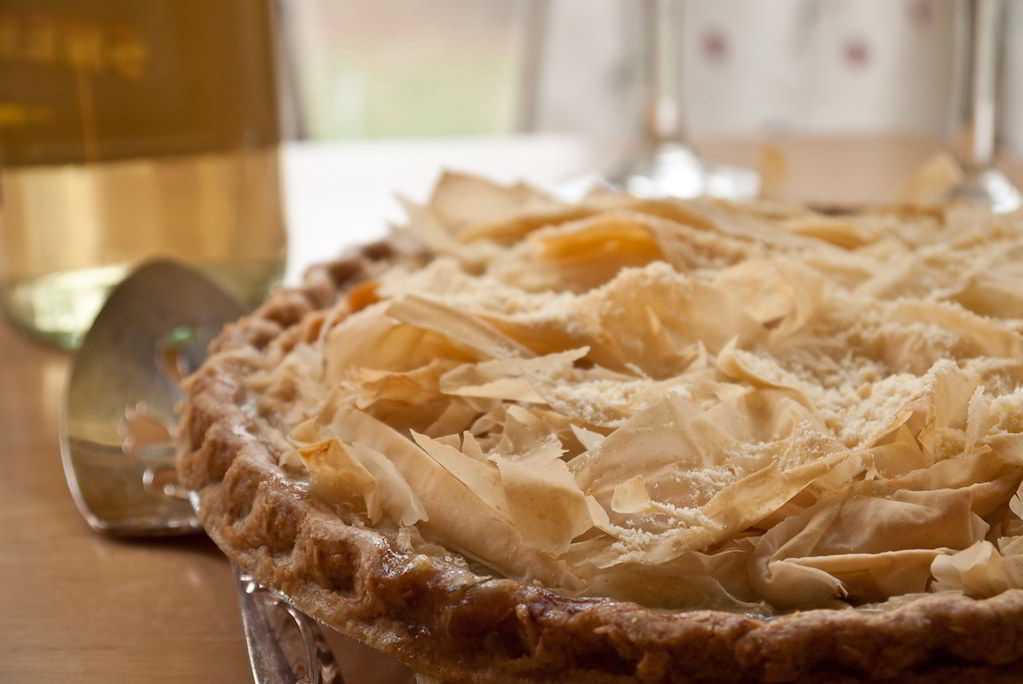
These are the reheating methods I’ve tested over the years, plus the real-world tweaks that keep the crust crisp and the center hot.
1. Oven (Best Overall)
This is the only method that brings the crust back to life and warms the filling evenly. Everything else is a compromise.
How to do it:
- Preheat to 350°F.
- Loosely tent the pie with foil, loose is key, you want steam to escape.
- Reheat 15–20 min for a whole pie or 10–12 min for a slice.
- Remove foil for the last 3–5 min if you want extra crisp.
The Subtle Details (this is the part most guides skip):
- If your crust is already dark, tent only the edges like a tiny pie collar.
- If your pot pie is deep-dish (Costco style), drop to 325°F and go slow, those take longer and burn faster.
- You’ll know it’s ready not by time, but by the center wobble, it should jiggle softly like a cheesecake.
- Bubbling at the edges = hot filling; violent bubbling = overcooked chicken. Pull it.
2. Air Fryer (Best for Maximum Crunch, but Needs Help)
Air fryers crisp beautifully, but the filling heats slowly, that’s why people end up with crunchy crust + cold middle.
How to do it:
- Microwave the slice for 20–30 seconds to remove the chill from the center.
- Air fry at 325°F for 4–6 minutes until the crust looks revived.
The Subtle Details:
- If your filling is on the thicker side, give it an extra 10–15 seconds in the microwave before air frying.
- If the crust is already fragile or flaking, air fry at 300°F, lower heat, slower crisp, no burning.
- If the bottom crust is soggy, place the slice on a piece of parchment to prevent sticking and encourage airflow.
You can also use the air fryer to warm up frozen pot pies.
You can take a look at the video below, which shows you the exact steps to take when reheating a chicken or meat pie that has been frozen.

3. Skillet (Best for Reviving Soggy Bottom Crusts)
This is the technique chefs use to bring pastry back from the dead.
How to do it:
- Heat a nonstick skillet on medium-low.
- Add the slice crust-side down.
- Cover for 2 minutes to warm the filling, then uncover and crisp the bottom for another 1–2 minutes.
The Subtle Details:
- If your filling is very saucy, crisp uncovered for a longer time, it firm ups the base.
- If your bottom crust is falling apart, dust a tiny bit of flour in the pan first for structure.
- If the top crust feels dry, lightly mist with water before covering, it softens just enough to re-flake.
4. Microwave (Fast, but Only Good With a Fix)
If you just want your pot pie warm fast, the microwave gets the job done. Just know upfront: microwaves never crisp anything, they heat the filling quickly, but the crust stays soft every time. (Not good for reheating baked or fried foods).
That’s just how they work with baked or fried foods. Using lower power helps it heat more evenly, but the texture will always be “soft and warm,” not “crispy and revived.” If you need crunch, you’ll have to finish it in the oven or air fryer afterward.
How to do it:
- Slice it first. Cut the pot pie into wedges and place a slice on a microwave-safe plate. (Smaller pieces heat more evenly.)
- Cover lightly. Drape a paper towel over the top to reduce splatter and keep the crust from drying out too fast.
- Use low power. Microwave on the lowest power setting for 1–2 minutes. Slow, gentle heat = fewer cold spots.
- Check and continue. If the center isn’t warm yet, continue microwaving in 30–60-second bursts until hot and steamy.
- Let it rest. Give it a minute to settle before eating, the filling gets lava-level hot.
- Then crisp the slice in a hot skillet for one minute (or 2–3 minutes in the air fryer).
Your Best Move From Here
At this point, you know exactly which method fits your situation, whether you want speed, crispiness, or the closest thing to fresh-baked. Pick the approach that matches your time, your tools, and your patience, and you’ll get a pot pie that actually tastes good instead of sad and soggy.
And if you’re wondering how to reheat other foods without ruining them, I’ve got you covered.
I put together a full Reheating Food Hub with guides for fried foods, pasta, pizza, chicken, and more, all tested, all practical.
