
Reheating waffles sounds simple… until you actually do it.
Microwaved waffles turn soft and soggy.
Oven waffles take forever.
Toaster waffles burn on the edges and stay cold in the center.
I’ve mangled enough leftover waffles to realize something important:
There is only ONE rule that determines whether a reheated waffle tastes good or sad:
You have to re-crisp it before you reheat it.
That’s it.
That’s the whole secret.
And yet almost no one does it.
People throw waffles into whatever appliance is closest and hope for the best. But waffles aren’t bread. They aren’t pancakes. They’re tiny honeycombed fat-catchers with a crisp exterior that dies the moment they cool.
Reheating a waffle isn’t about heat.
It’s about reviving structure.
Let me explain, quickly, because you probably just want to eat your waffle.
What Happens to a Waffle 10 Minutes After It’s Cooked
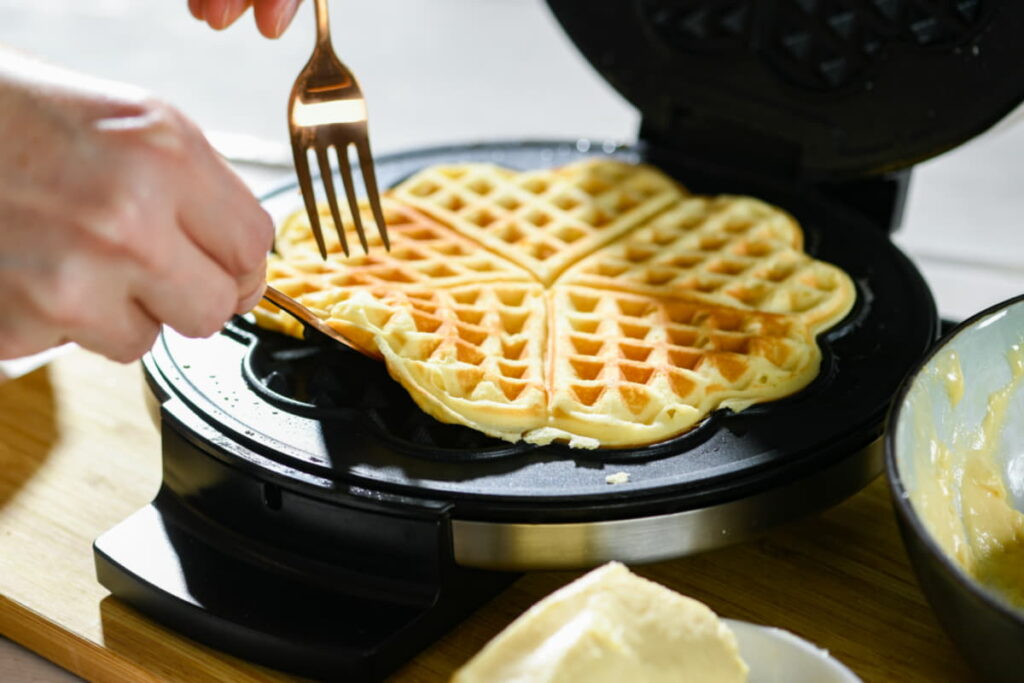
A fresh waffle tastes amazing because the steam inside is still pushing outward, keeping the exterior crisp while the inside stays soft. That’s the magic moment.
But as the waffle cools, that steam disappears, it escapes or “collapses” back into the waffle. When that happens, the structure softens and the crisp shell loses its crunch.
Here’s the short version of what’s going on:
- Steam escapes → no more outward pressure
- Starches firm up → the inside gets tougher
- Moisture drifts to the surface → the crisp layer turns soft
- Texture collapses → you get the dreaded “warm sponge” waffle
That’s why reheating isn’t about “warming it up.”
It’s about getting the extra moisture off the surface again so the waffle can crisp back up.
That’s recrisping.
What You’re Really Trying to Get Back When Reheating a Waffle
People say they want to “reheat a waffle,” but they actually want to restore one of three things:
- The original crisp edges: The signature waffle snap, the part that dies the fastest.
- The warm, fluffy center: Without it becoming rubbery or dried out.
- Convenience: Because nobody reheats waffles on a weekday looking for spiritual fulfillment.
Your reheating method should match the result you care about most.
Here’s how each one actually behaves.
If You Want Maximum Crispiness → Use the Toaster
Most people don’t know this, but the toaster is the closest thing to putting a waffle back on a hot iron.
Why it works
Direct radiant heat revives the browned exterior without steam-softening the middle.
How to do it (quick + simple)
- Set toaster to medium (a shade below what you’d use for toast).
- Reheat 1 cycle, check, then toast again for 10–20 seconds if needed.
- Don’t use the bagel setting, it heats unevenly.
What to expect
A crisp exterior, warm center, and no sogginess.
This works for homemade waffles, diner waffles, and frozen waffles.
Experience tip
Thinner waffles crisp faster. Thick Belgian waffles may need two shorter cycles rather than one long cycle to avoid burning the ridges.
If You Want Fluffy, Soft, “Diner-Style” Waffles → Use the Oven
This is for people who like warm, soft waffles, not crunchy ones.
Why it works
Gentle heat warms the whole waffle evenly without drying the interior.
How to do it
- Preheat oven to 350°F
- Place waffles directly on the rack or on a sheet
- Heat for 5–7 minutes (longer for thick Belgian waffles)
What to expect
A warm, soft waffle with mild exterior crisp, not crunchy.
Experience tip
If your leftover waffles are starting to dry out, wrap them loosely in foil. The trapped steam restores softness without turning them mushy.
If You Want It Fast and Don’t Care About Crisp → Microwave Works
This is the “I overslept and have four minutes before I log into work” method.
Why it works/doesn’t
Microwaves heat water molecules rapidly, great for speed, terrible for crispness.
How to do it
- Place waffle on a plate
- Cover with a damp paper towel
- Microwave 10–15 seconds at a time until warm
What to expect
Soft, warm waffles. No crisp. Honestly fine if you’re loading it with syrup or using it as a base for something else (egg sandwiches, ice cream, peanut butter).
Experience tip
Microwaved waffles can be rescued: Give them 10–20 seconds in the toaster afterward to restore some texture.
If You Want a “Better Than Fresh” Crisp → Use the Air Fryer
Not everyone has one, but if you do, your waffles may never be the same.
Why it works
Dry circulating heat + airflow = crisper edges than the toaster.
How to do it
- Air fry at 360°F for 2–3 minutes
- Flip halfway for even browning
- Don’t overcrowd; airflow matters
What to expect
A waffle with almost caramelized edges and fluffy interior, shockingly good.
Experience tip
If you have frozen waffles, the air fryer is unbeatable. It’s like someone reinvented breakfast.
If Your Waffle Is Dry or Stale → This Simple Trick Revives It
This is one of those tiny insights Google can’t summarize well because it comes from actual kitchen experience:
Reintroduce a tiny bit of moisture before reheating.
Here’s how:
- For toaster or air fryer:
Lightly mist or brush the waffle with water. Yes, water. - For oven:
Place a ramekin of water on the baking sheet. - For microwave:
Use the damp paper towel trick.
Why this works:
Hot, dry appliances need some moisture available so they don’t pull hydration out of the waffle’s interior.
Frozen Waffles vs. Homemade Waffles: They Reheat Differently
Frozen waffles
- Designed to be toasted
- Contain more sugars and leaveners
- Crisp faster, brown better
Homemade waffles
- Often softer
- Contain more real butter/fat
- Benefit more from oven or air fryer
If yours are homemade or restaurant leftovers, be gentle. If you have frozen waffles, treat them like little champs, they can take heat.
Reheat Waffles Based on the Result You Want
Reheating waffles isn’t complicated once you decide what you’re after:
- Crisp edges – toaster or air fryer
- Soft diner-style waffles – oven
- Fastest – microwave
- Dry waffles – add moisture first
Pick the method that fits the moment, and your leftover waffles will taste a lot better than they have any right to.
If you have a waffle-reheating trick of your own, or want the best way to reheat something else ,drop a comment. I’m always testing new ideas for future guides.
