

The fastest, most reliable way to reheat a fried egg is this:
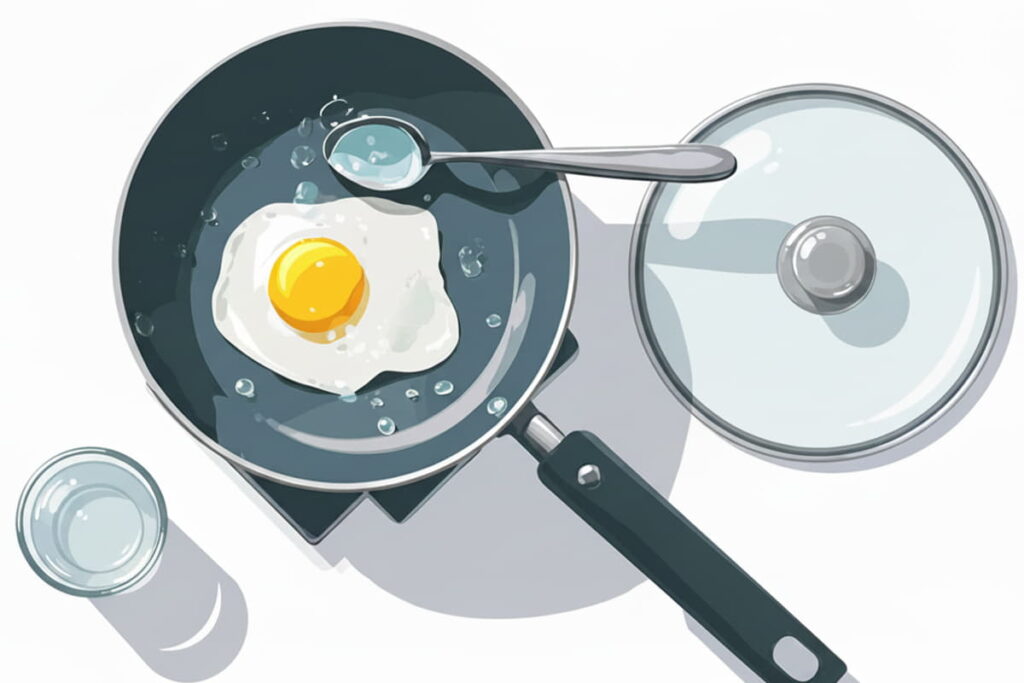
Warm a nonstick skillet on low, add a teaspoon of water, slide the egg in, cove, and heat for 1–2 minutes. The steam gently warms the yolk and keeps the whites soft , no rubbery texture, no drying out.
Right below, you’ll find:
- Faster options (if you’re in a hurry)
- The best method for runny vs. firm yolks
- Microwave instructions that won’t ruin the egg
- What I learned from a chef + the science behind why this works
- Mistakes to avoid
- Safety + storage tips
Everything you might search next is here, so you can scroll once and be done.
Best Method: Reheat a Fried Egg in a Skillet (Recommended)
If you want a reheated fried egg that tastes close to fresh, this is the method. It’s quick, gentle, and fixes the classic issues: rubbery whites, tough yolks, and scorched edges.
What You Need
- Nonstick skillet
- Lid
- 1 teaspoon of water
- Low heat
- Cold or room-temperature fried egg
Step-by-Step (Fast to Scan, Strong on Detail)
1. Preheat the skillet on low for around 30 seconds.
Just enough to warm the pan, not hot.
Low heat is the whole trick here.
2. Add 1 teaspoon of water to the empty side of the pan.
Not on the egg.
The water is your steam source.
- Helps cold eggs warm evenly
- Prevents whites from tightening
- Keeps yolk from overcooking
3. Slide the egg into the skillet.
Both work fine:
- Cold egg: Takes a little longer
- Room temp egg: Warms the fastest
No need to wait for the egg to warm up on the counter, the steam handles it.
4. Cover the pan immediately.
This traps the steam so the yolk warms from the top down, not just from the bottom of the pan.
5. Heat for 1–2 minutes.
This is what most readers skim for, so keep it clear:
- Cold egg: 90 sec – 2 min
- Room temp egg: 60–90 sec
Quick doneness check:
Yolk should feel warm but soft when nudged with a spatula or spoon
Whites should look relaxed, not tight
Other Ways to Reheat a Fried Egg (Quick Options)
Not everyone wants to pull out a skillet,understandable. If you just need something fast, hands-off, or equipment-friendly, these alternatives get the job done without wrecking your egg.
Microwave (Fastest Option)
Best for: Mornings when you’re rushing
Time: 20–30 seconds total
How to do it (without ruining the egg):
- Place the egg on a plate
- Cover with a damp paper towel
- Use 50% power
- Heat in 10-second bursts until warm
Pros:
- Fastest method
- Zero cleanup
Cons:
- Easy to overcook
- Texture can tighten quickly
- I’ve tried reheating fried eggs in the microwave plenty of times, and the whites almost always toughen up unless you keep the power low.
Note: If you want to geek out on why microwaved eggs get rubbery, there’s a helpful Reddit thread that goes into hilarious detail.
Air Fryer (Great for Crispy Edges)
Best for: Fried eggs with firm yolks or reheating breakfast sandwiches
Time: 1–2 minutes at 300°F (150°C)
How to do it:
- Place egg on foil or parchment
- Air fry at 300°F
- Check at the 1-minute mark
Pros:
- Crispy edges (if you like that)
- Hands-off
Cons:
- Can dry out the yolk
- Not ideal for runny yolks
Oven or Toaster Oven (Best for multiple eggs)
Best for: Meal prep or reheating 2–6 eggs
Time: 5 minutes at 300°F (150°C)
How to do it:
- Place eggs on parchment-lined tray
- Heat for 5 minutes, or until warm
Pros:
- Even heating
- Perfect for batch reheating
Cons:
- Too slow for one egg
- Uses more energy
How to Choose the Best Reheating Method (Based on Your Situation)
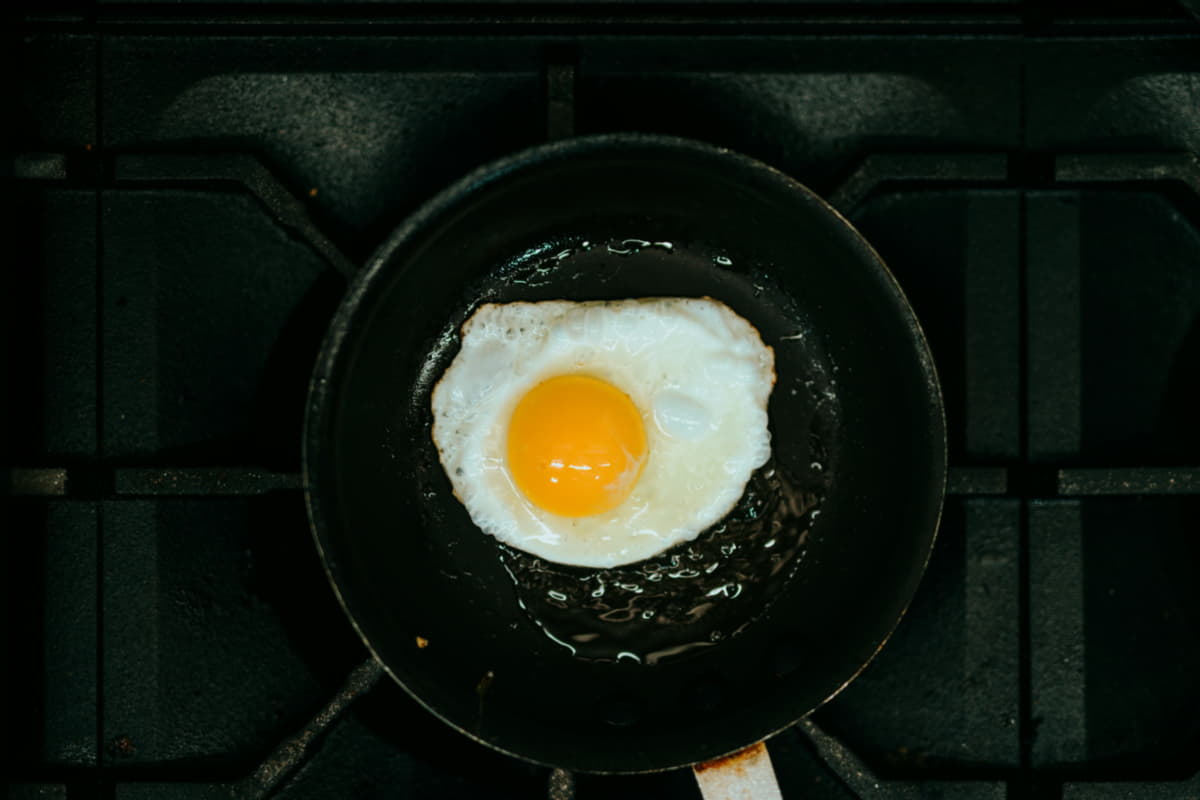
Once you know the methods, the real question is: Which one actually fits what you’re working with? I used to just toss leftover eggs in the microwave, but after batch-cooking more and ruining a few along the way, I learned that each method has its place.
And quick note: reheating will never beat cooking an egg fresh. Egg whites and yolks tighten at different temperatures, and once those proteins firm up, the texture’s never the same. That’s why the gentle methods work best. (If you want the deep dive, the USDA has a great explanation.)
Here’s how to choose the best method for your situation.
If your egg has a runny yolk
Go with the skillet or a steam basket.
These are the only methods that consistently keep that soft, runny center without overcooking it. When I first tried reheating runny-yolk eggs, the microwave turned them firm around the edges in seconds — and now I know that’s the proteins tightening too fast.
If your yolk is already firm
The air fryer or microwave (low power!) works just fine.
Firm yolks are more forgiving since most of the protein changes already happened when you originally cooked the egg.
If the egg is cold from the fridge
Use the skillet or microwave on 50% power.
Cold eggs need gentle heat so the whites don’t tighten before the yolk warms. I learned this the hard way, a cold egg blasted in the microwave turns rubbery almost instantly.
If you’re reheating multiple eggs
Use the oven.
It heats evenly and doesn’t shock the proteins the way a microwave can. When I started prepping a few eggs overnight for busy mornings, this was the easiest way to warm them all without babysitting.
If you want zero cleanup
Microwave.
Is it perfect? No. But if you use low power, it keeps the whites from tightening too much and gets you out the door fast.
If you’re reheating a breakfast sandwich
Air fryer.
It firms everything up just enough and brings back that “freshly assembled” feel.
You Might Like: Guide to Reheating Scrambled Eggs
Where to Go Next for Even Better Egg Results
Reheating a fried egg is always a balancing act, once the proteins in the whites and yolks tighten, the texture changes fast, which is why fresh will always be best when you have the time. But when life gets busy (and I’ve been there), these gentle reheating methods make a big difference.
If you want to understand eggs more deeply, why they behave the way they do, how heat affects them, and how to cook them better overall, my full egg guide is where I break it all down.
And if you batch-cook different styles of eggs, you can jump straight into:
Both follow the same principles but need slightly different handling to keep their texture right.
That should cover everything you’d ever need when dealing with leftover eggs — fresh, fried, scrambled, or folded.

thanks so much. this save me some money compared to buying breakfast for work.